Last updated October 31, 2026
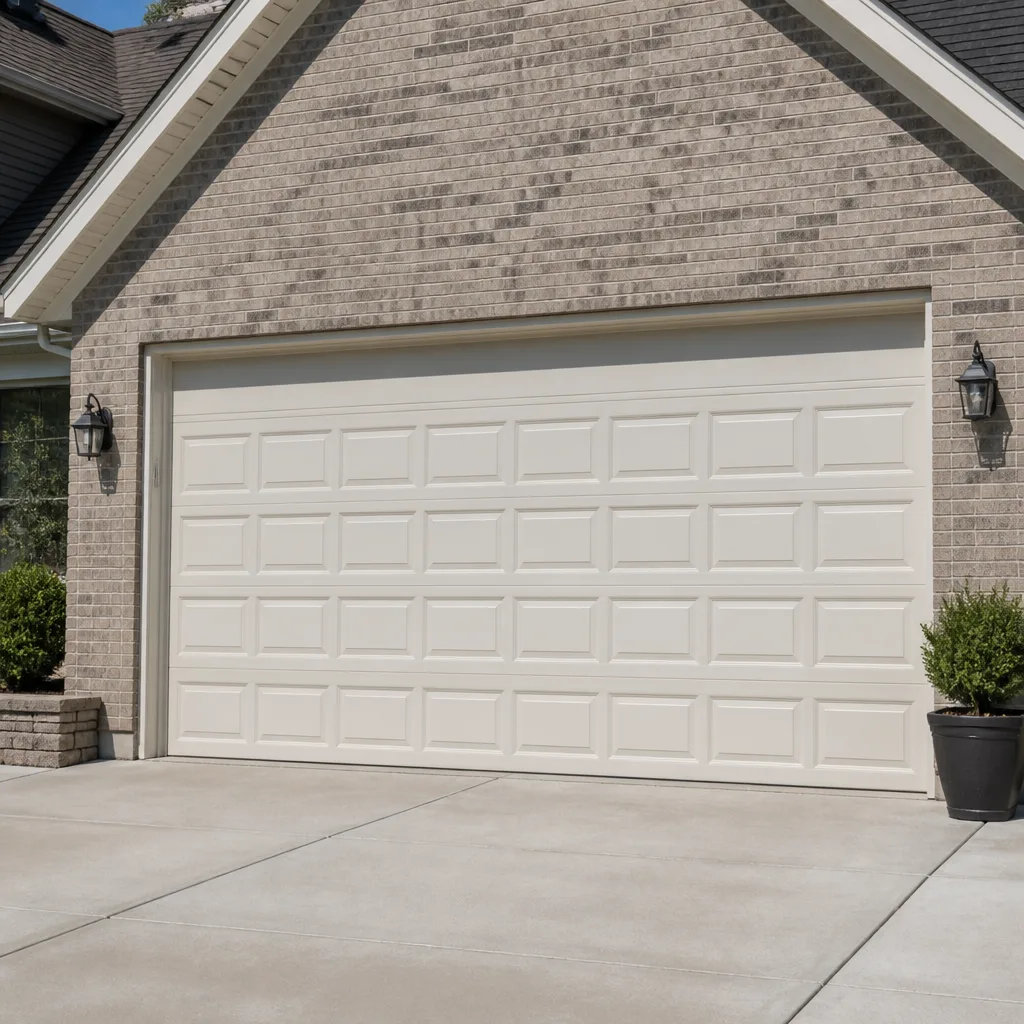 Raised-panel steel
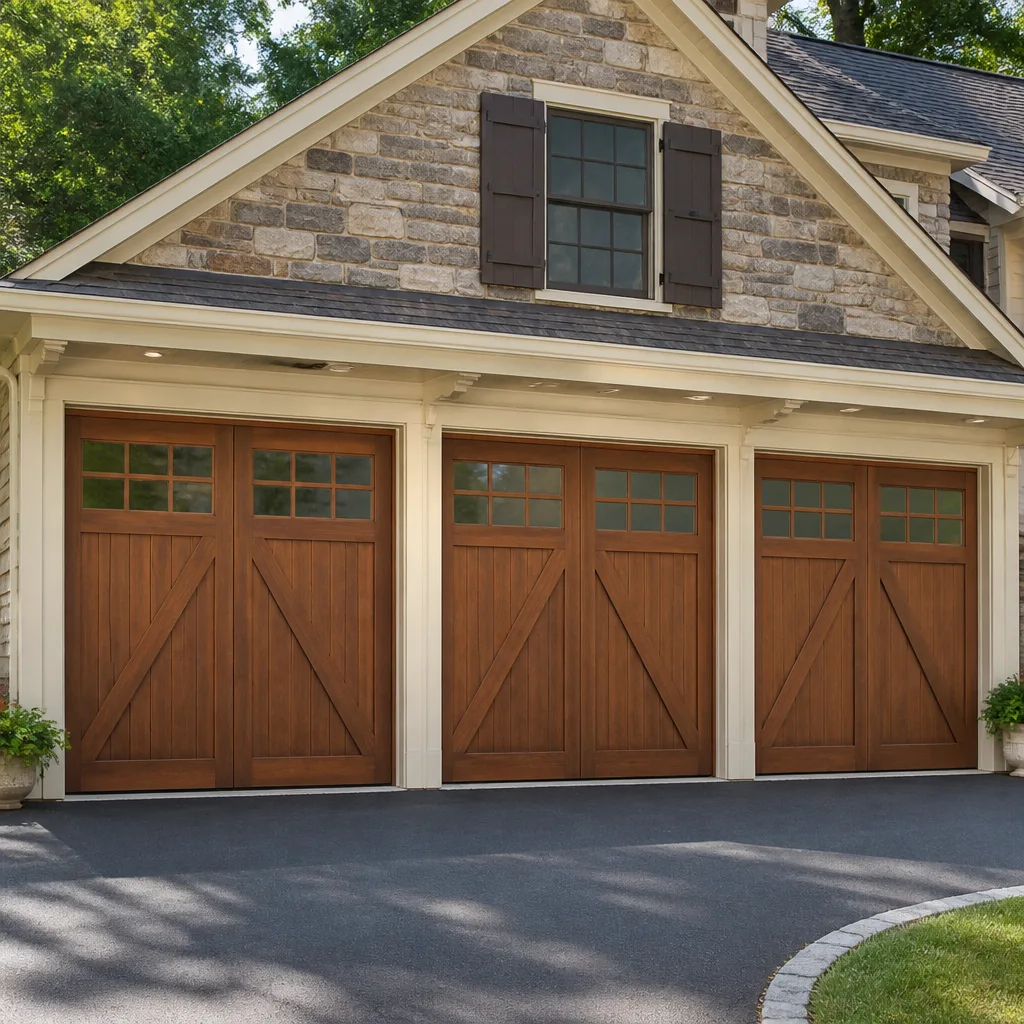 Carriage house
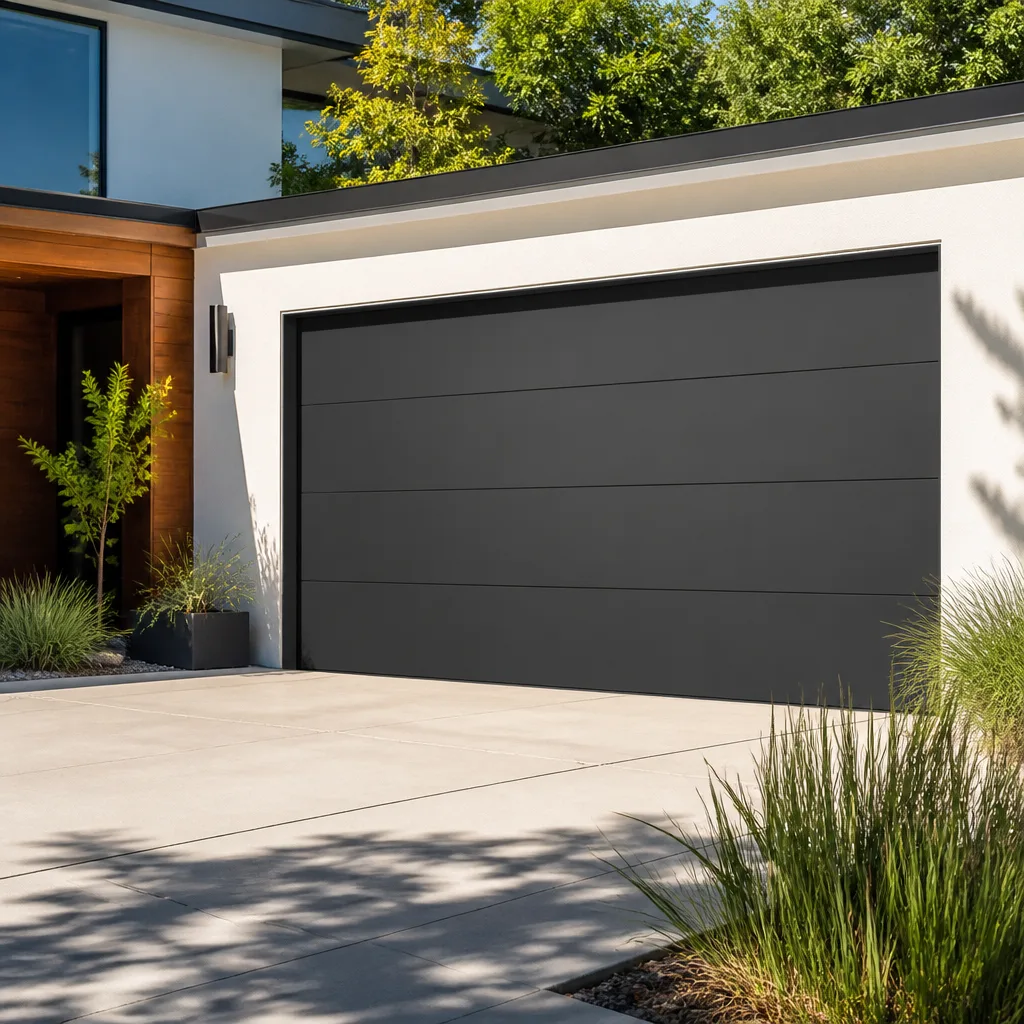 Modern flush
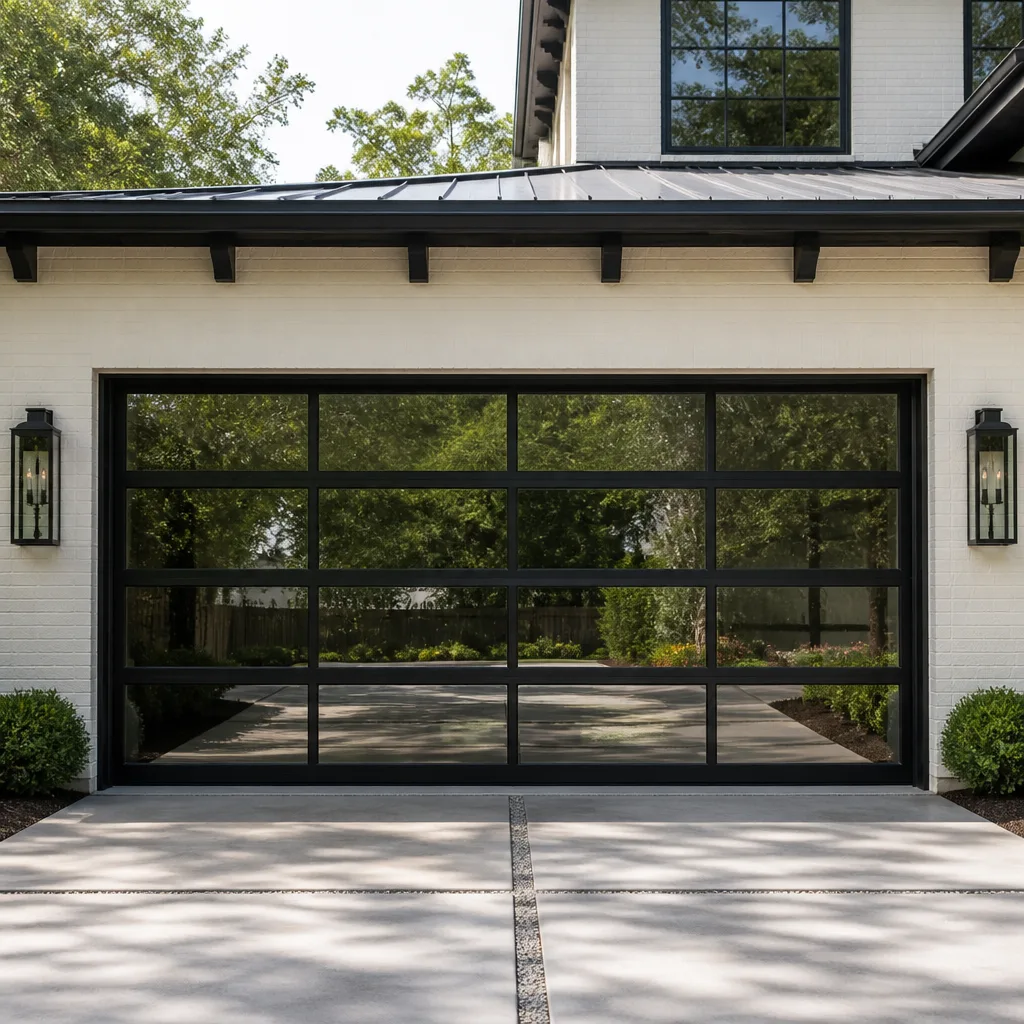 Full-view glass
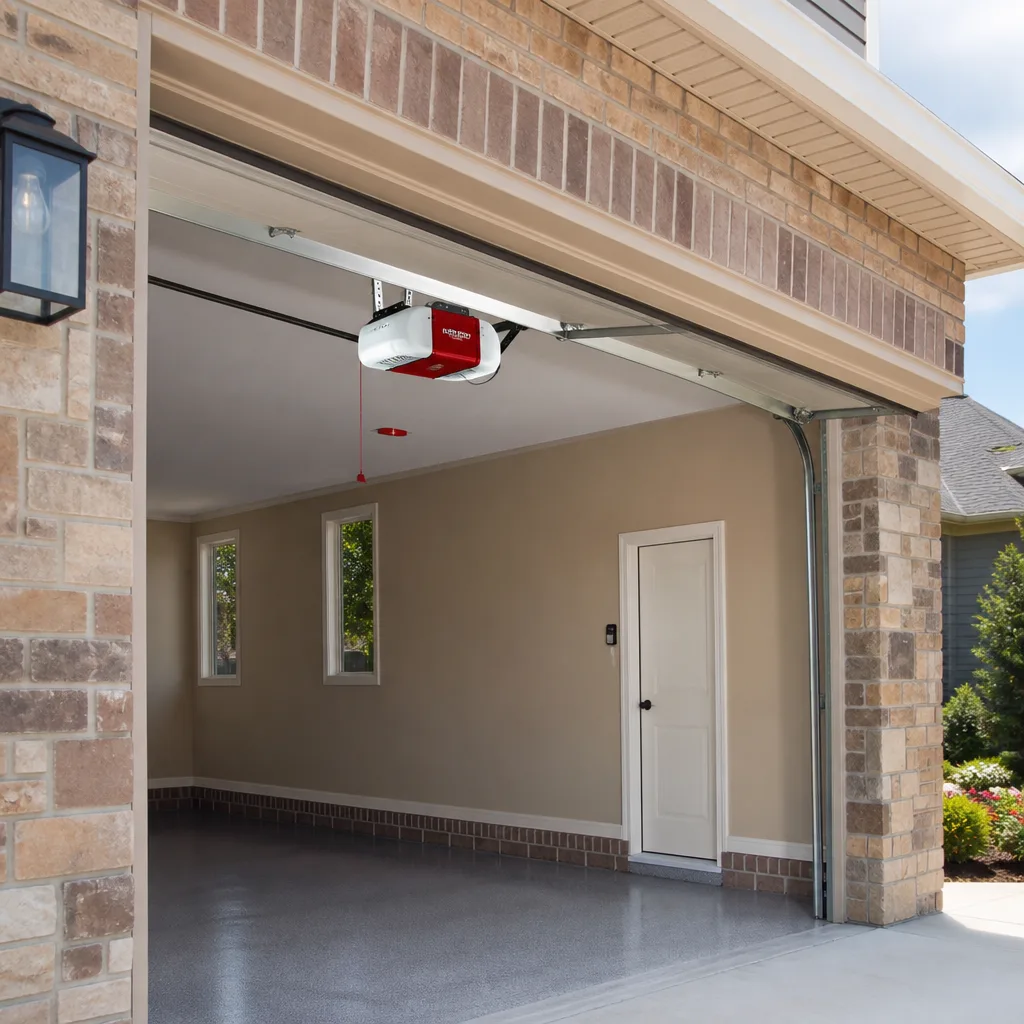 LiftMaster openers
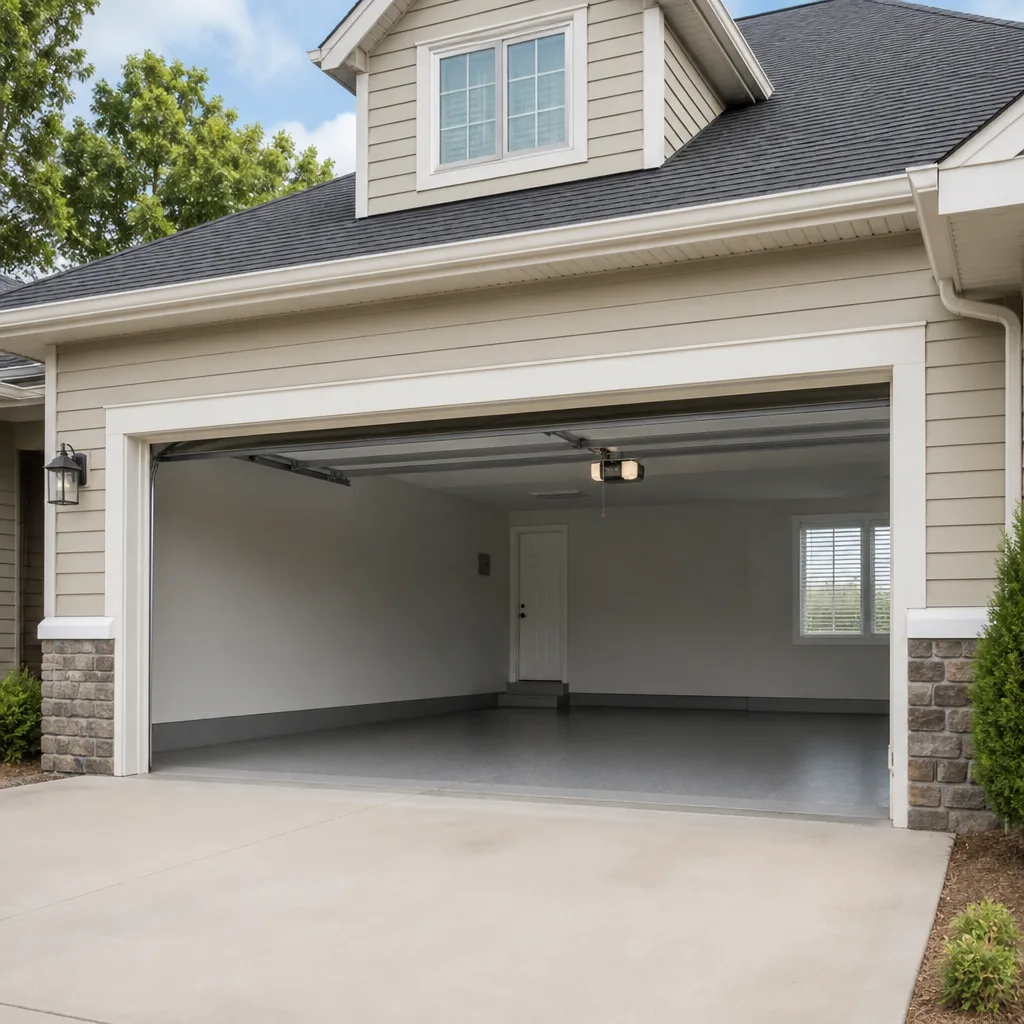 Chamberlain openers
Full 25-point door and opener safety check with every visit - springs, cables, rollers, tracks, and your LiftMaster or Chamberlain opener included
You get a price before we start. It does not change when the truck arrives.
Get your free estimateThe Complete Guide to Garage Door in Santa Ana
Most Santa Ana homeowners discover their garage door was the wrong choice for their home after installation. The guide they read was written for Denver’s dry cold or Phoenix’s relentless sun. Santa Ana is neither. We’re 10 miles from the coast with marine-layer mornings, 85-degree summer afternoons, and garage doors that face a particular kind of salt-tinged humidity that inland SoCal cities never deal with. This guide covers what actually matters in Santa Ana: which door materials survive here, which brands dominate local housing stock, what local HOAs actually enforce, and how to avoid paying for a full replacement when a targeted fix gets you another decade of service. For more guides & resources specific to Orange County homes, see our blog.
Quick Answer
The best garage door for a Santa Ana home depends on three factors most national guides ignore: your home’s era (which dictates what’s already installed), your neighborhood’s HOA rules (Floral Park and Washington Square enforce more than Morrison Park), and your specific microclimate exposure (morning coastal humidity versus afternoon inland heat). For most Santa Ana homeowners, a steel door with a wood-grain finish from Clopay or Amarr offers the best balance of durability, curb appeal, and cost. Repair over replacement is frequently the financially smarter call. If you need a professional assessment, call Royal Garage Door Co at (866) 808-7312 for a free estimate.
Styles & brands we work with
Table of Contents
- What Fails First on Santa Ana Garage Doors
- Choosing the Right Door Material for Santa Ana’s Climate
- The Brands Already Installed in Santa Ana Homes, by Era
- HOA Compliance in Santa Ana: Floral Park vs. City Code
- Repair vs. Replacement: The Math for Santa Ana Home Values
- Cross-Brand Serviceability: What to Ask Before You Buy
- Garage Door Openers: The Repair Most Companies Won’t Touch
- What Installation Actually Costs in Santa Ana
What Fails First on Santa Ana Garage Doors
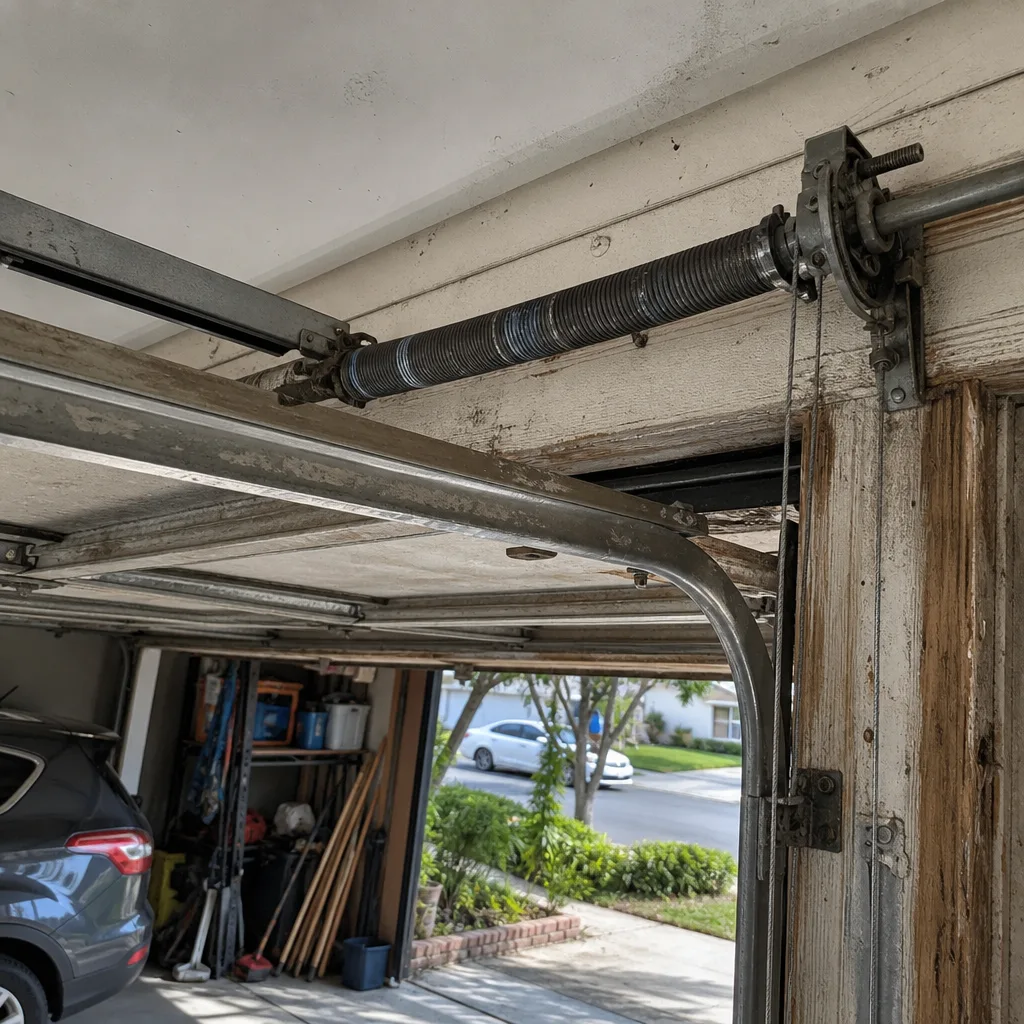
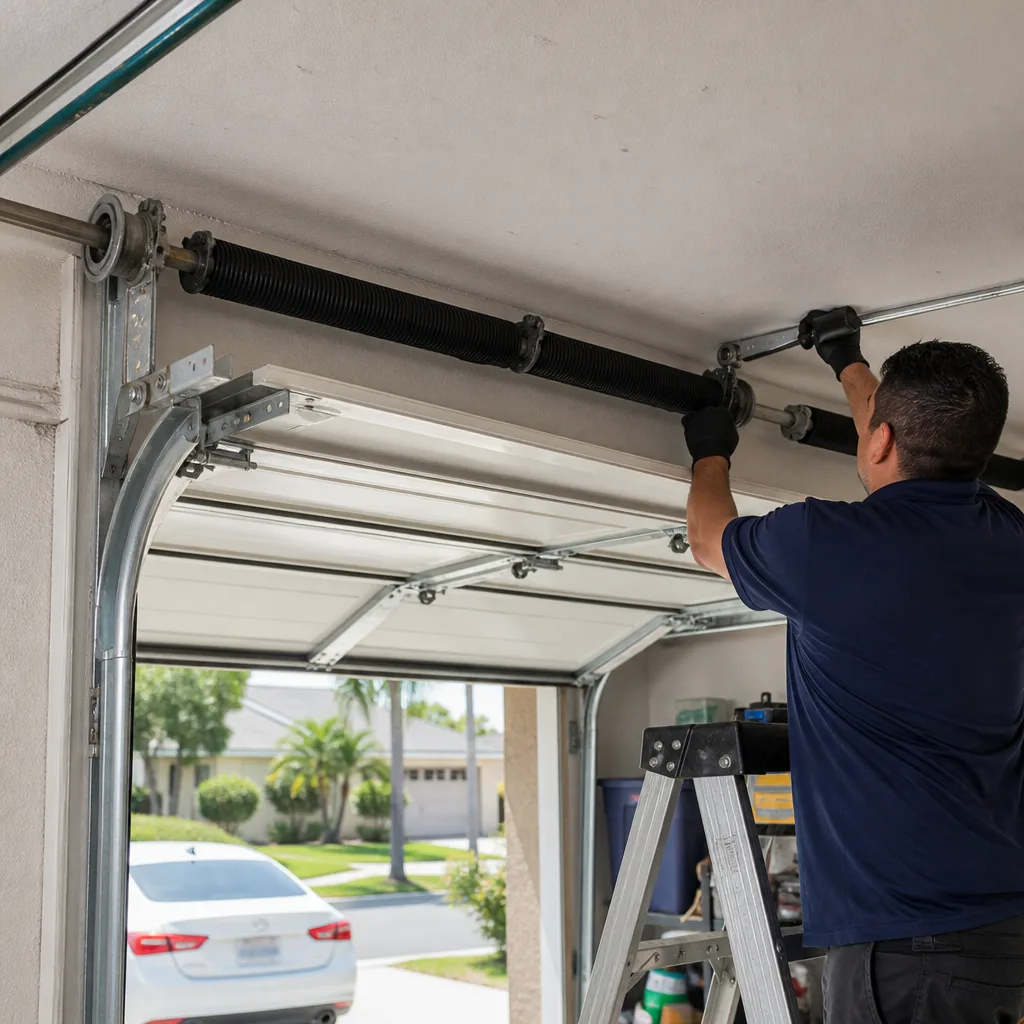
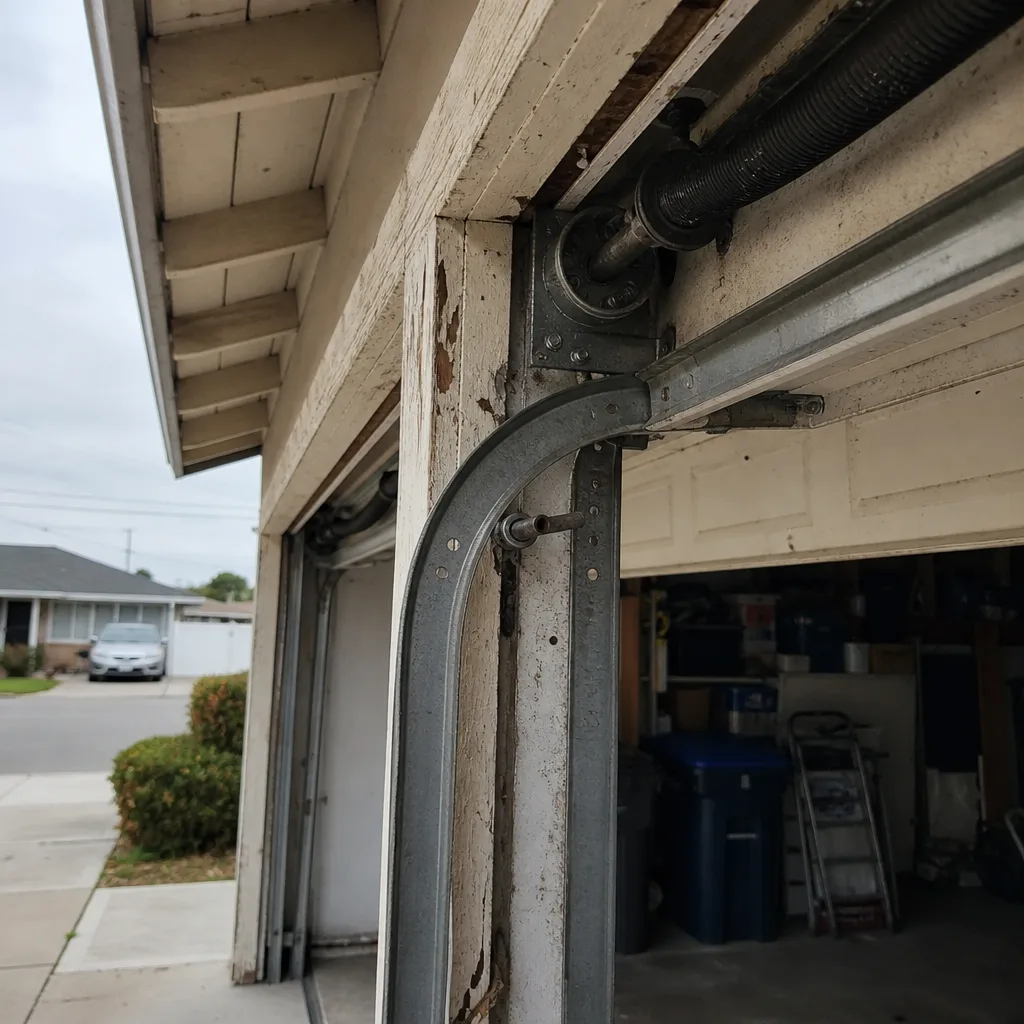
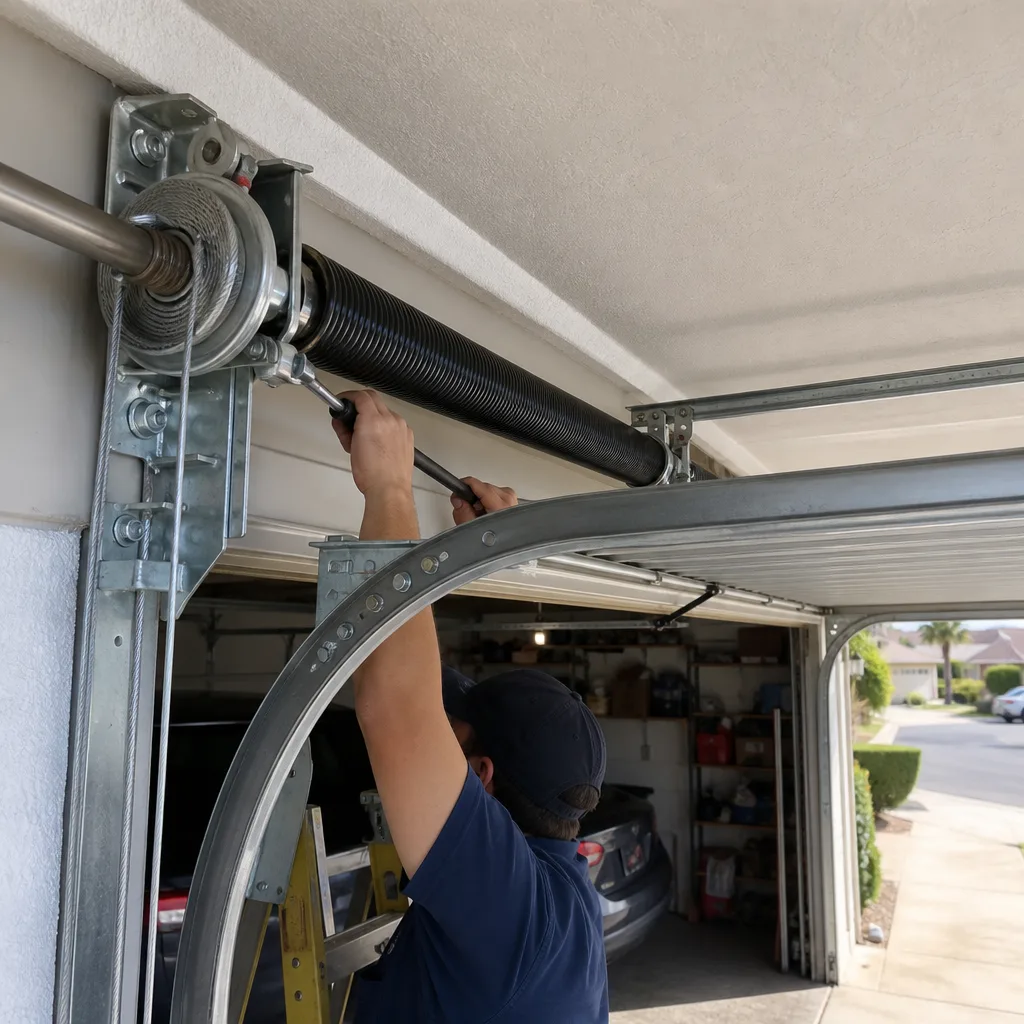
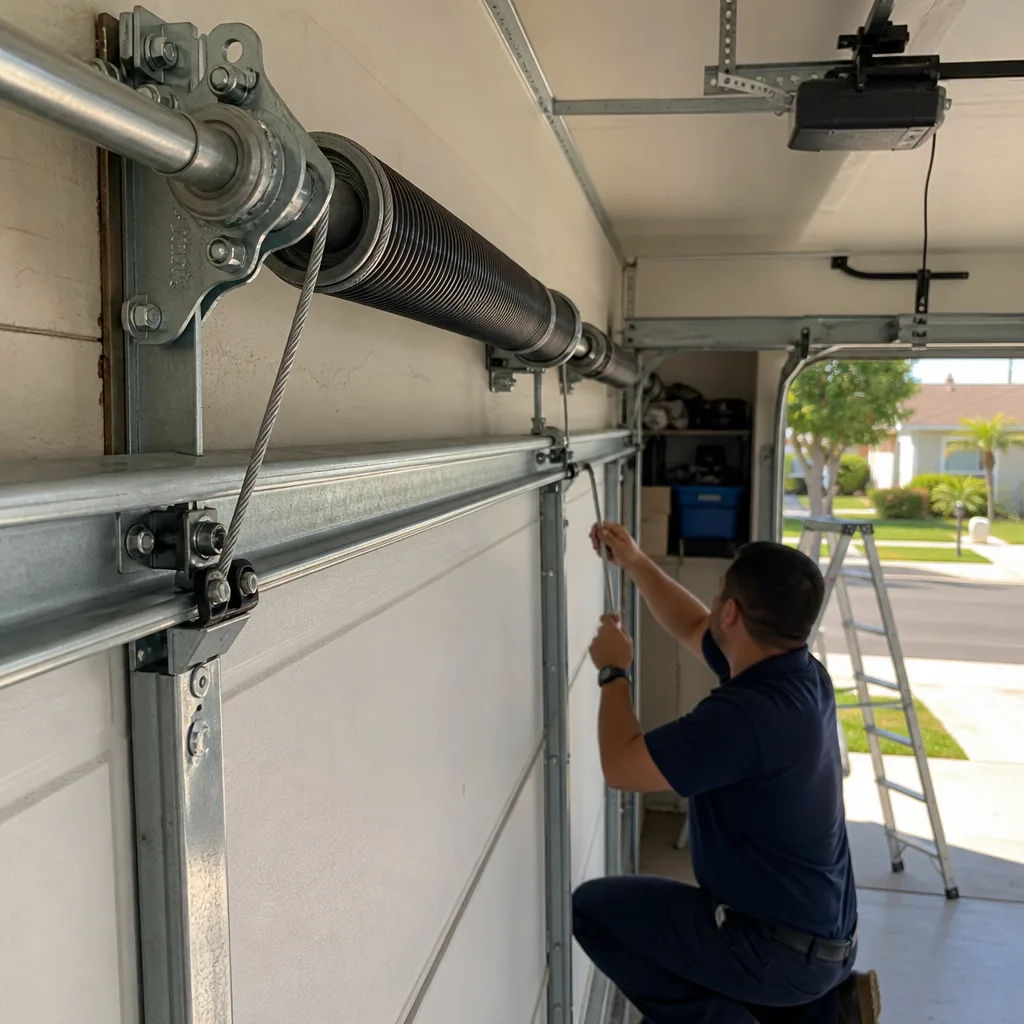
In our experience working on residential garage doors across Santa Ana, the failure patterns here are distinct. The coastal-influenced humidity that rolls through French Park and Riverview in the early morning accelerates something specific: spring corrosion. Torsion springs on Santa Ana doors rust faster than the same springs installed in Tustin or Anaheim Hills, where the air stays drier through the night. A rusted spring doesn’t break quietly. It snaps, the door drops, and suddenly you’re not going anywhere.
But springs aren’t the whole story. Here’s what we see most often, ranked by frequency:
- Spring corrosion and failure – The marine layer brings salt and moisture. Springs rated for ten years often fail in seven to eight in Santa Ana’s western neighborhoods.
- Track misalignment from settling – Santa Ana’s soil shifts. Homes built on the city’s older alluvial soil, especially in the central districts, experience slow foundation movement that subtly twists door tracks out of alignment.
- Opener logic board failures – Power fluctuations during Santa Ana wind events and summer brownouts take a toll on opener circuit boards, particularly on older LiftMaster and Genie units.
- Cable wear near the bottom brackets – Condensation collects at the base of the door where cables attach. This is a corrosion hot spot on nearly every aging Santa Ana door we inspect.
- Weather seal degradation – The UV exposure in Santa Ana’s fall months, combined with morning moisture, breaks down rubber seals faster than homeowners expect.
Here’s the practical takeaway: if your door is between eight and twelve years old and hasn’t had a spring replacement, you’re living on borrowed time in Santa Ana’s specific climate. A complete garage door repair in Santa Ana that addresses springs, cables, and track alignment in one visit costs less than a single emergency call at 7 a.m. on a workday.
Choosing the Right Door Material for Santa Ana’s Climate
Door material choice in Santa Ana is a microclimate calculation, not a style preference. The city’s geography creates two zones within its own borders. Homes west of the 5 freeway, in neighborhoods like Willard and Casa Bonita, live under the marine layer’s influence. Homes east of the 55, closer to Mabury Park and the Santiago Hills edge, face hotter afternoon temperatures and more direct UV. The same door behaves differently in each zone.
Steel: The dominant choice across Santa Ana, and for good reason. A properly painted and sealed steel door from Clopay or Amarr handles both zones well. Steel resists warping, which matters in the humidity differential between morning and afternoon. The downside is dent vulnerability, which we see regularly in neighborhoods with narrow driveways and frequent street parking. Steel doors rated 24-gauge or thicker outperform the cheaper 27-gauge doors that builders installed in the 1990s.
Aluminum: Common on mid-century modern homes in Sandpointe and the South Coast Metro edge. Aluminum has a clean look that HOA boards in gated communities like West Floral Park often mandate. It handles coastal humidity without rusting, but it’s the least insulated option. In Santa Ana’s inland heat zone, an aluminum door without a thermal break turns your garage into an oven by 3 p.m.
Wood and wood composite: Beautiful, and required by some of Santa Ana’s historic district guidelines in Floral Park. But wood demands more maintenance here than in drier inland cities. The morning marine layer penetrates unfinished wood grain. Without annual sealing, wood doors in Santa Ana begin showing water damage at the bottom panels within five years. Wood composite from market leaders like Amarr offers the look without the constant upkeep.
Fiberglass: Less common in Santa Ana, but a sensible choice for homes with direct western exposure. Fiberglass doesn’t rust, doesn’t dent as easily as steel, and holds its color under UV. The tradeoff is higher cost per square foot and fewer design options.
The material question always leads to the same fork: what does your HOA require, and what does your specific street’s microclimate demand? Those two answers narrow the field faster than any national buying guide.
The Brands Already Installed in Santa Ana Homes, by Era
Walk any Santa Ana street and you’ll notice a pattern in the garage doors. The city’s housing stock developed in distinct waves, and each wave came with its own default brands and models. Knowing what’s likely already on your house helps you understand what replacement parts you’re dealing with and whether a repair is straightforward.
1950s to Early 1970s Tract Homes – Santa Ana’s mid-century boom neighborhoods, including much of the central corridor near Bristol and McFadden, originally shipped with wood doors or early aluminum panels. Most of those originals are long gone. What remains is usually a 1980s or 1990s replacement, often a Wayne Dalton or Craftsman door, sometimes a builder-grade Amarr. These homes frequently have odd-size openings by today’s standards, which is important to know before ordering a replacement.
1970s to 1980s Subdivisions – The neighborhoods around Santiago Park and along Main Street’s northern stretch saw second and third-wave tract building. Here, the original doors were often aluminum frames with tinted glass inserts. Many homeowners still have these, and many want them gone. Replacement interest in these areas is high, and the most common upgrade choices are Clopay steel with decorative glass or Amarr carriage-house styles that fit the existing openings.
1990s to 2000s Developments – This era saw Santa Ana add larger communities near the South Coast Metro area and in the Mabury Park vicinity. These homes came standard with steel doors, predominantly from Clopay and Wayne Dalton. This is the sweet spot for serviceability: parts are widely available, standard sizes, and most technicians are familiar with the hardware.
2010s and Newer HOA Communities – Newer construction in Santa Ana, particularly townhome and condo communities, skews toward Amarr and Clopay steel doors with specific HOA-mandated colors and panel profiles. What matters here is the HOA’s approved vendor list and whether you’re allowed to work with an outside company for repairs. We’ve had homeowners in newer gated communities tell us their property manager said only the original builder’s installer could touch the door. That’s almost never true in Santa Ana city limits, but your CC&Rs may have aesthetic rules you must follow.
The reason this matters practically: if your door is a 1998 Wayne Dalton steel with a broken spring, replacement parts exist and the repair is routine. If your door is a 1974 custom aluminum with a seized track system, you’re looking at a full garage door installation in Santa Ana, not a repair. The era answers the question before you spend a dollar.
HOA Compliance in Santa Ana: Floral Park vs. City Code
Santa Ana has at least a dozen active homeowners associations, and they operate with varying levels of enforcement. Understanding which kind of oversight you’re under determines what you can install, what colors are allowed, and whether you need pre-approval before any work starts.
Floral Park and West Floral Park – These historic neighborhoods aren’t HOA-governed in the traditional sense, but the Floral Park Neighborhood Association maintains design standards that the city formally recognizes through the Historic Resources Commission. If your home falls within a designated historic district, any door change visible from the street needs to match the home’s architectural character. Composite wood-grain doors are the usual path. A flamboyant modern design will draw a notice.
Standard City Code Requirements – What most homeowners don’t realize is that Santa Ana’s building code has its own rules that apply regardless of HOA status. These include:
- Garage doors must be self-balancing per California’s residential code standards
- Openers installed since 1993 require an auto-reverse safety feature that’s tested annually
- Any structural modification to the garage opening itself, including widening or changing the header, requires a city permit
- Door and opener replacements that reuse the existing opening typically don’t require permits
- Fire-rated doors may be required for garages attached to living space, depending on your home’s construction era
The Practical HOA Reality – In our service calls across South Coast Metro’s gated communities and the townhome associations near MacArthur Place, the pattern is consistent: HOA boards care about what’s visible from the street, not what’s inside your garage. A new opener? Almost never regulated. A new door panel with a different window configuration? That gets noticed. Before buying, pull your CC&Rs and check the architectural review section. It takes twenty minutes and saves weeks of back-and-forth.
If you’re unsure whether your planned door change passes HOA review, the team at Royal Garage Door Co home has worked with Santa Ana associations for years and can tell you whether your choice fits local design patterns before you spend on the door itself.
Repair vs. Replacement: The Math for Santa Ana Home Values
The instinct to replace a garage door when something breaks is expensive and often wrong. In Santa Ana’s housing market, where the median home value sits in a range where every dollar of renovation should be measured against resale impact, the repair-first calculation usually wins. Here’s the math in concrete terms.
A full door replacement in Santa Ana, installed, runs between $2,600 and $6,800 depending on material, insulation, design, and window count. See our Garage Door Cost Breakdown: The Santa Ana Homeowner’s Reference for 2026 for detailed pricing by scenario. A spring replacement runs $180 to $340 for standard torsion springs, including parts and labor. A track realignment might be $150 to $250. A new set of cables: $120 to $220. The difference is an order of magnitude.
When replacement is genuinely the right call, the decision should be driven by three factors:
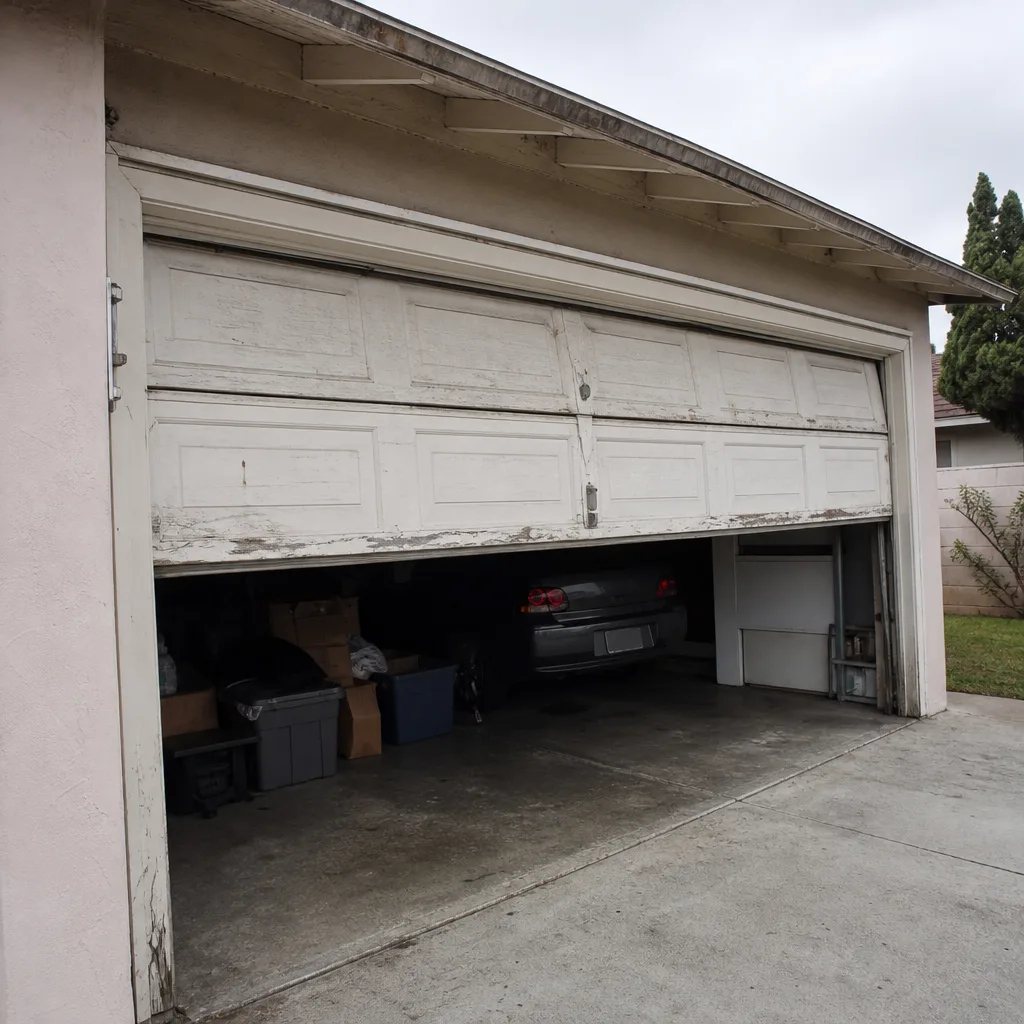
- Structural failure – A cracked bottom panel, a bent track that can’t be re-trued, or a door that’s begun to delaminate. These aren’t repairable.
- Efficiency loss – If your home has an attached garage and the door is uninsulated steel, replacement with an insulated door cuts energy transfer meaningfully in Santa Ana’s heat. This pays back over years, not months.
- Sale preparation – A new garage door has one of the highest return-on-investment ratios in home renovation, routinely exceeding 90 percent at resale. In a market like Santa Ana’s, where first impressions and curb appeal move properties, a replacement made in the year before listing often makes financial sense.
What we push back on is the upsell pattern we see from door companies that carry one product line. If a technician tells you your 2005 Clopay door needs full replacement because the spring broke, that’s not expertise. That’s a sales script. A broken spring is a routine, low-cost fix. The door itself may have another decade of service life.
The honest calculation is: repair cost versus the remaining life of the door versus the home value impact. Most Santa Ana homeowners should repair. A smaller number should replace. The right answer depends on your door’s actual condition, which is what a free estimate from a brand-neutral technician will tell you.
Cross-Brand Serviceability: What to Ask Before You Buy
Here’s a scenario we see repeatedly in Santa Ana: a homeowner replaces a door through a company that carries one brand. Two years later, a spring breaks. That company has moved on, or doesn’t serve the area anymore. The new technician arrives and tells you the parts are “special order” because the door came from a proprietary-line installer. You wait two weeks for a part that should be on a shelf.
The solution is asking the right question before you buy: can any qualified technician service this door, or does it require a proprietary or exclusive dealer?
This matters more than most buyers realize. Some door brands distribute through exclusive channels with hardware specifications that differ from the generic equivalent. While most modern doors use standardized torsion systems, certain models from certain years have quirks: a unique hinge pitch, a proprietary track profile, a specific drum diameter. A technician who only knows one brand might misdiagnose the issue or order the wrong part.
What to ask before you purchase:
- Are replacement springs, cables, and rollers available from multiple supply houses?
- Does the door use standard torsion hardware or a proprietary system?
- If the original installer goes out of business, who else can service it?
- Is the opener brand addressable by a technician familiar with multiple manufacturers?
This is where Royal Garage Door Co takes a different position than the single-brand shops. We carry working knowledge of eight major brands: LiftMaster, Chamberlain, Genie, Clopay, Amarr, Wayne Dalton, Craftsman, and Raynor. That’s not a marketing bullet. It’s a service reality. A technician who knows the hardware across those lines can diagnose your door based on what’s actually installed, not on a brand they’re incentivized to sell. The result is a repair that fixes the real problem in the first visit.
For the opener side specifically, check our garage door opener repair in Santa Ana page for a deeper look at cross-brand opener diagnostics.
Garage Door Openers: The Repair Most Companies Won’t Touch
There’s an unspoken truth in the garage door industry: opener repair is the service most door companies quietly avoid. They’ll replace a broken spring all day. They’ll install a new door without blinking. But when the opener logic board fails, or the travel limit needs reprogramming, many companies punt. They tell the homeowner they need a whole new opener, when the actual fix is a $95 circuit board or a 20-minute adjustment.
This matters in Santa Ana because of what’s already installed here. Homes built in the 1990s and 2000s, which make up a huge share of Santa Ana’s housing stock, came with builder-grade LiftMaster and Genie openers. Those units are now 15 to 25 years old. Many are still functional. When they glitch, the owner is told by the first company they call that the opener is “obsolete” and needs replacement. Sometimes that’s true. Often it isn’t.
Common opener symptoms and what they usually mean:
- Door opens halfway and reverses – Usually a travel limit calibration issue or an obstruction sensor misalignment. Not a replacement.
- Clicking sound but no movement – Often a capacitor failure. The fix is a component replacement, not a new opener.
- Remote works intermittently – Signal interference from a new LED bulb or a failing receiver board. Diagnosable.
- Door reverses immediately after touching the floor – Force setting is off. A calibration issue.
- Opener runs but chain or belt doesn’t move – Broken gear on the drive assembly. Repairable on most LiftMaster and Genie models.
When an opener from the 1990s truly needs replacement, the question becomes which opener works best with your existing door and your needs. Chamberlain remains the most widely installed brand in Santa Ana. LiftMaster dominates in newer homes. Both are excellent, and both are brands we know thoroughly. The point isn’t the brand. It’s whether the opener choice matches the door weight, cycle demand, and your household’s smart-home setup.
The opener is also where the “one call, one visit” promise matters most. A door tech who doesn’t do openers has to refer you out. A general handyman who doesn’t understand opener logic boards might chase the wrong problem for two hours and charge you anyway. Royal Garage Door Co treats opener repair as a core specialization, not an afterthought. It’s what turns a frustrating two-company experience into a resolved issue in a single visit.
What Installation Actually Costs in Santa Ana
Let’s talk about what a garage door replacement in Santa Ana really costs, because the national averages you see online don’t reflect this market. Santa Ana’s labor rates are shaped by Orange County costs, the city’s permit requirements, and the specific access constraints of its housing stock. Older homes near Delhi and Bishop Manor have narrow driveways and tight clearance that add labor time. Newer subdivisions near South Coast Metro have wider access and go faster.
Cost ranges for residential work in Santa Ana, based on what we see across the city:
| Service | Typical Santa Ana Range | What Affects It |
|---|---|---|
| Torsion spring replacement (standard steel door) | $180 – $340 | Spring wire size, cycle rating, single vs. double spring |
| Cable replacement (both sides) | $120 – $220 | Door weight, bottom bracket condition |
| Opener circuit board replacement | $95 – $280 | Brand and model year |
| New opener (motor only, installed) | $425 – $750 | Motor HP, smart features, drive type |
| Full door replacement (single, steel, no windows) | $2,600 – $4,200 | Insulation, gauge, finish |
| Full door replacement (double, wood composite, with windows) | $4,400 – $6,800 | Custom sizing, design, glass type |
| Track realignment | $150 – $250 | Extent of misalignment, bracket replacement |
These are the numbers we work with daily. Your exact price depends on what’s installed, what broke, and what your access looks like. What doesn’t change is our quoting policy: we give you the price before any work starts, and that’s the price you pay. No discovery charges, no surprise line items, no “it ended up needing more parts” conversation at the end.
For a complete breakdown of door replacement options and costs, see our garage door installation in Santa Ana page.
Common Mistakes to Avoid
- Buying a door for Dallas weather. National buying guides don’t account for Santa Ana’s morning marine layer and afternoon heat. A door that works in Denver doesn’t necessarily hold up in Willard or Casa Bonita. Match materials to the actual microclimate of your street, not a generic “coastal” or “inland” category.
- Replacing a door when a spring will do. The most expensive mistake we see. If your door is otherwise sound, a $250 spring replacement solves the problem. Don’t let a commission-driven pitch turn that into a $4,000 project.
- Ignoring HOA review requirements. Installing a door that violates your CC&Rs creates a forced replacement. The association can require you to remove and replace at your own cost. Twenty minutes of document review prevents it.
- Choosing an opener based on price alone. A $300 opener installed on a door it can’t handle will fail repeatedly. Match the opener to door weight and daily cycle count. This is where “cheap” becomes expensive.
- Skipping the annual safety reversal test. California code requires it, and it takes 60 seconds. A door that doesn’t reverse on resistance is a genuine safety hazard for kids and pets. Test it monthly if you have young children.
- Hiring based on the lowest bid without checking capability. A general handyman can’t reliably diagnose opener logic boards. A single-brand installer can’t service what you already own. Match the technician’s expertise to your specific equipment.
- Deferring spring noise as “normal.” A squealing spring isn’t just annoying. It’s telling you the coil is binding and corrosion is advancing. Address it early for a fraction of the emergency cost.
See the difference
 Before
 After
 Before
 After
 Before
 After
When to Call a Professional
Some garage door issues are genuinely dangerous to address without training. Torsion springs hold enormous tension. A spring that snaps during a DIY attempt can cause serious injury. Cables under load can fray and whip. If your door is off-track, making grinding noises, or refusing to stay open, don’t attempt a repair. The risk isn’t worth the savings on a $200 fix. Call a professional.
Specific signals that warrant an immediate call: the door drops too fast when lowering, the spring has visible rust or a gap in the coil, the opener reverses without obstruction, or one cable is slack while the other is tight. Royal Garage Door Co offers free estimates in Santa Ana. Call (866) 808-7312 and we’ll assess the problem on-site, quote the fix upfront, and complete the work the same day when parts are on hand. For guidance on handling after-hours failures safely, review our Garage Door Emergency Preparedness Guide for Santa Ana Homes.
Frequently Asked Questions
Standard torsion spring replacement in Santa Ana typically runs $180 to $340, including parts and labor. The final price depends on spring wire size, whether your door uses one or two springs, and the cycle-rating you choose. Call (866) 808-7312 for an exact quote after a quick on-site assessment. Estimates are free.
Yes. Royal Garage Door Co offers same-day service for most repair calls in Santa Ana, including spring replacement, cable repair, and track realignment. Call (866) 808-7312 before noon for same-day dispatch. Opener logic board repairs may require a part pickup, which can shift timing to the next day depending on the specific model.
No. The price we quote after seeing your door is the price you pay. We diagnose the actual issue first, explain what needs to happen and why, and get your approval on a fixed number before any work begins. No discovery fees, no surprise line items.
We stock the most common torsion springs, cables, rollers, hinges, and safety sensors for the major brands found in Santa Ana homes, including Clopay, Amarr, Wayne Dalton, LiftMaster, Chamberlain, Genie, and Craftsman. For less common parts on older custom doors, we source quickly from local supply houses and schedule your follow-up immediately.
We service and install eight major residential brands: LiftMaster, Chamberlain, Genie, Clopay, Amarr, Wayne Dalton, Craftsman, and Raynor. That covers the vast majority of doors and openers already installed in Santa Ana homes. We don’t push a single product line. We fix what you have.
It depends on your specific community. Gated communities like West Floral Park and newer townhome associations near South Coast Metro typically require architectural review before a visible door change. Standard city-issued permits are usually not required for same-size door replacements. Check your CC&Rs first, and if you’re unsure, we can help determine whether your planned door fits local design patterns.
A standard single-door replacement takes four to six hours on site. Double doors with custom sizing or special design features can take a full day. We schedule installations in advance and give you a firm timeline before the work starts. Door replacement isn’t same-day work: it’s measured, ordered, and scheduled.
The Bottom Line
Your garage door is the most-used entry point in your home, and in Santa Ana’s specific climate, it faces challenges that generic advice doesn’t address. The right decisions start with understanding what’s already installed, what your HOA requires, and what your street’s microclimate demands. Repair before replacement is usually the financially smart path. When replacement is the right call, choose materials and brands that work for this city, not for a national average. And before you buy anything, ask whether a future technician will be able to service it. At Royal Garage Door Co, we know your brand. One call, one visit, one solution. Call (866) 808-7312 for a free estimate on any repair, opener issue, or installation need in Santa Ana.
Written by the team at Royal Garage Door Co, serving Santa Ana since 2016.