
Last updated October 31, 2026
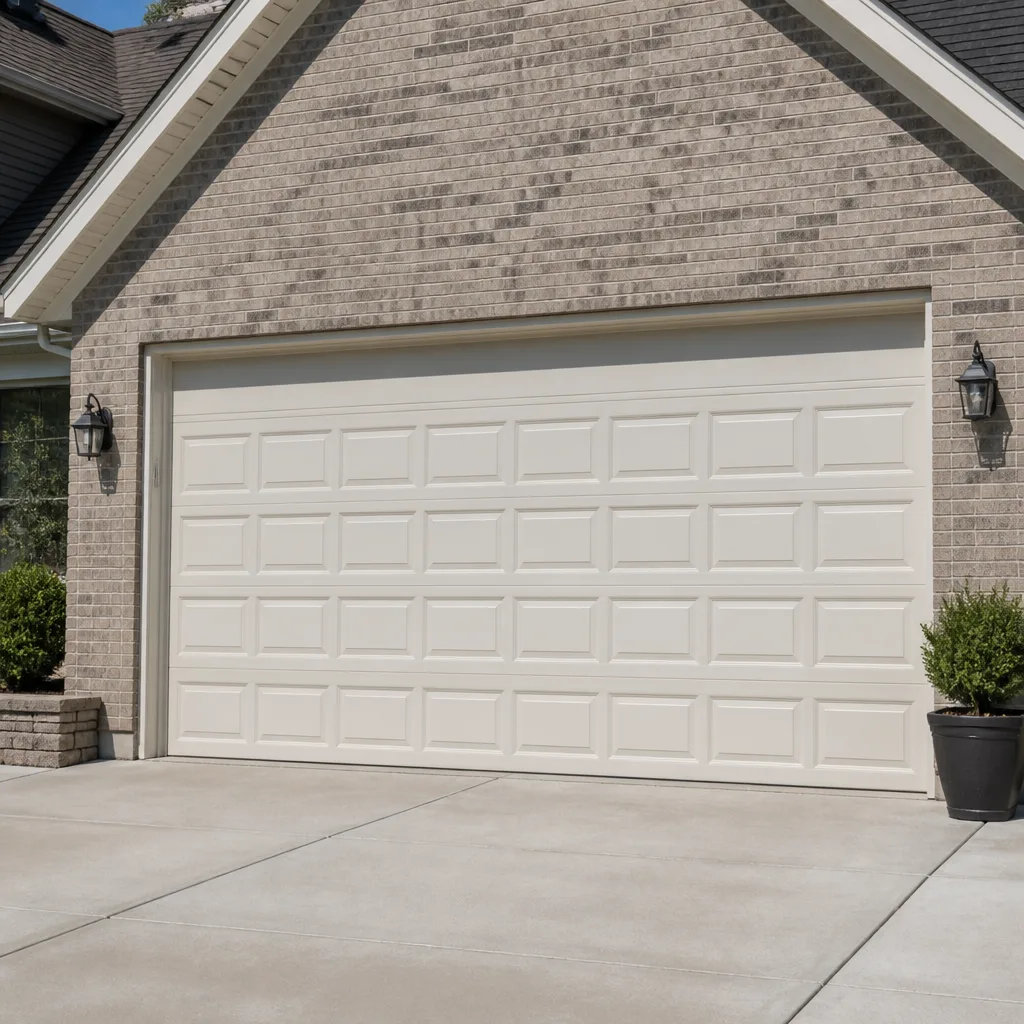 Raised-panel steel
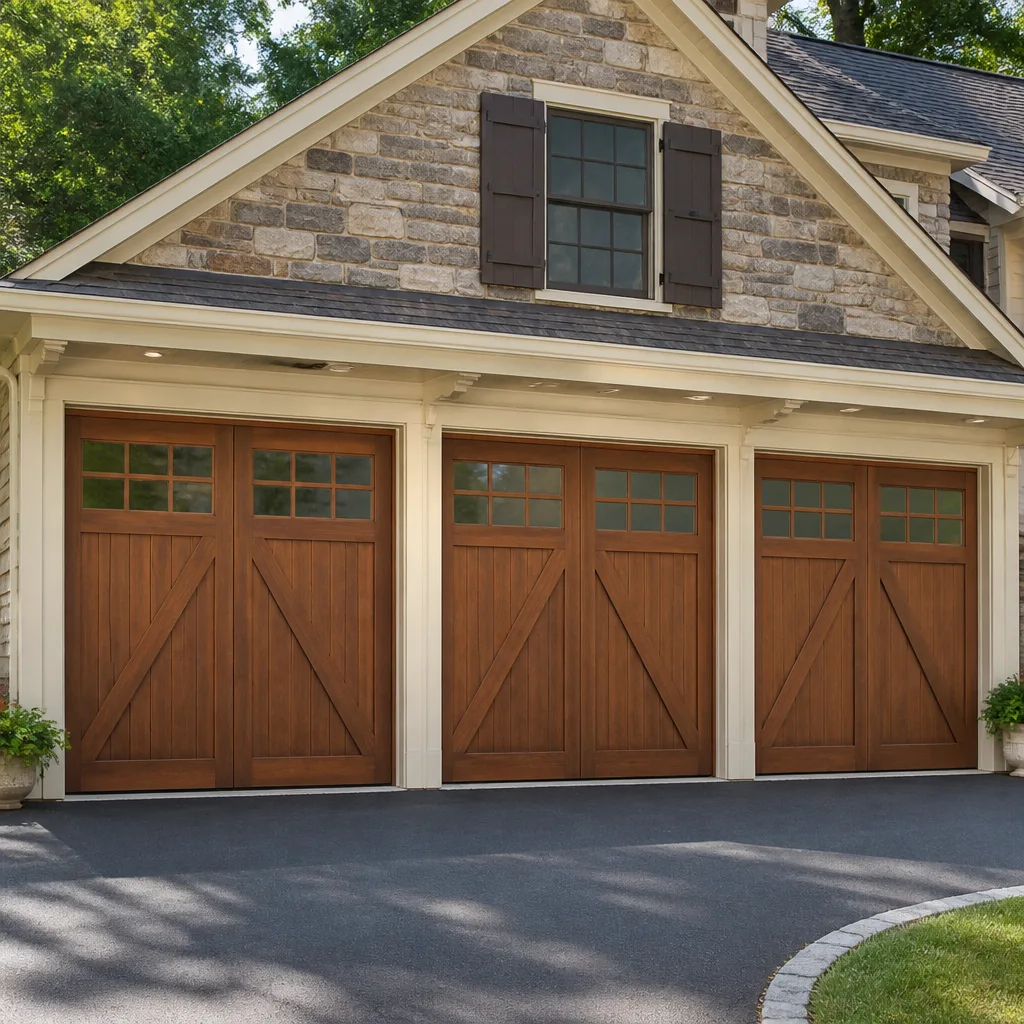 Carriage house
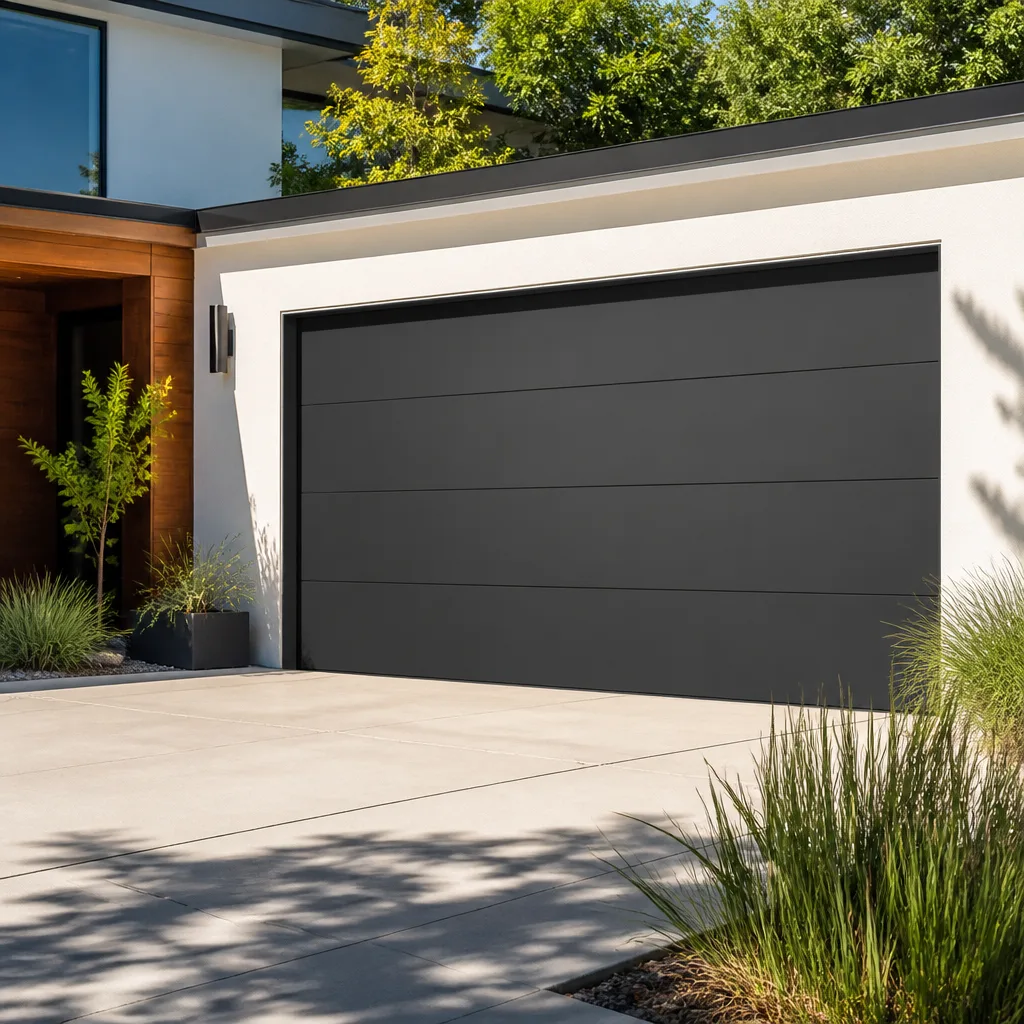 Modern flush
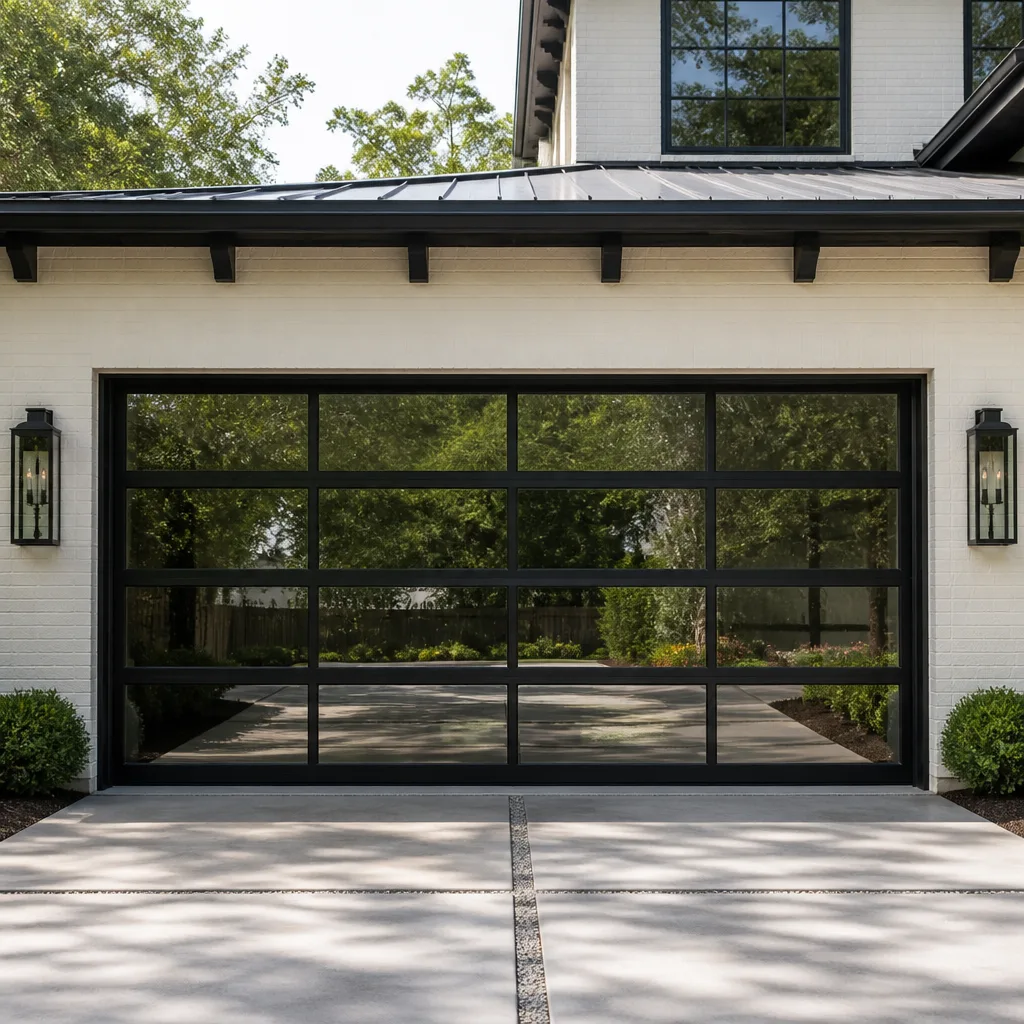 Full-view glass
 LiftMaster openers
 Chamberlain openers
Full 25-point door and opener safety check with every visit - springs, cables, rollers, tracks, and your LiftMaster or Chamberlain opener included
You get a price before we start. It does not change when the truck arrives.
Get your free estimateGarage Door Permits, Codes & Inspections in CA: What You Need to Know
A garage door is the largest moving object in most homes, and California treats it that way when it comes to building codes. But here’s what surprises most Santa Ana homeowners: the majority of garage door repairs don’t require any permit at all. The permit threshold kicks in only when the work changes the structure, the footprint, or the energy performance of the building. That distinction, between a repair and a replacement that triggers code compliance, is where unpermitted work quietly becomes a liability, surfacing years later during a home sale or an insurance claim. This guide and our Garage Door Repair Maintenance Checklist for Santa Ana Homeowners explain exactly where those lines fall in California and in Santa Ana specifically, what inspectors actually check, and how to avoid the $200 savings that turns into a $6,000 negotiating loss.
Quick Answer
Most garage door repairs and like-for-like replacements in California do not require a permit, but any installation that modifies the opening, changes the door’s weight class, or involves new structural headers does. In Santa Ana, the building department requires permits for new garage door installations in new openings, structural modifications to existing openings, and any electrical work beyond a simple opener swap. Like-for-like door replacement and standard opener replacement are typically exempt, provided the work meets California Building Code and Title 24 energy standards. When in doubt, call the City of Santa Ana Building Safety Division before work begins.
Styles & brands we work with
Table of Contents
- When a Permit Is Required: Repair vs. Replacement vs. New Installation
- Santa Ana Municipal Code: The Exact Thresholds
- Title 24 Energy Compliance: What an Insulated Door Changes
- UL 325 Safety Standards: Why Inspectors Check the Opener
- Who Pulls the Permit: Contractor Duty vs. Homeowner Liability
- What the Santa Ana Building Department Actually Checks
- What Permits Cost and Who Pays
- The Real Cost of Skipping a Permit: The Escrow Scenario
When a Permit Is Required: Repair vs. Replacement vs. New Installation
The California Building Code (CBC), which every city in the state adopts with local amendments, separates garage door work into three categories: repair, replacement, and new installation. Understanding which category your project falls into determines whether you need to visit City Hall before the work truck arrives.
Repair work covers fixing what’s broken without changing the door’s specifications. A snapped torsion spring, a bent track, a burned-out opener motor, a cracked panel swapped for an identical panel. This category is exempt from permitting in virtually every California municipality, including Santa Ana. The door’s weight, dimensions, and function remain unchanged. The building department doesn’t want to review a spring replacement any more than you want to pay a fee for one.
Replacement work gets more nuanced. If you’re swapping a door for one that’s materially identical, same size, same weight class, same energy rating, in an existing opening with the existing header, most jurisdictions treat it as exempt. But the moment the new door is heavier, wider, or insulated when the old one wasn’t, you’re crossing into territory where the City of Santa Ana expects a permit. A heavier door changes the load on the header and the track mounting points. That’s a structural question, not a cosmetic one.
New installation almost always requires a permit. Cutting a new opening in a wall, converting a carport into an enclosed garage, or adding a door where none existed triggers plan review, structural calculations, and inspection. This is also the category where the most expensive mistakes happen, because homeowners sometimes assume a “garage door guy” can handle the entire scope. In our experience working across Santa Ana’s older neighborhoods, the homes in Washington Square and Floral Park built before engineered headers became standard are the ones where new openings require the most careful review by a structural engineer before the building department will even accept the permit application.
Here’s the practical breakdown:
- No permit needed: spring replacement, cable replacement, track repair, panel replacement with identical panel, opener motor replacement, remote or keypad replacement, weather seal replacement.
- Permit needed: new door in a new opening, widening an existing opening, replacing a door with a significantly heavier model, converting a manual door to an automatic door where framing changes are required, any electrical circuit addition for a new opener location.
- Gray zone, call first: replacing a non-insulated door with an insulated one in an attached garage, converting a single door to a double door, adding windows to a door where the old one had none.
The gray zone is where we tell Santa Ana homeowners to spend ten minutes on the phone with the Building Safety Division before spending money. A quick call to the counter staff at 20 Civic Center Plaza can save you from a stop-work order later.
Santa Ana Municipal Code: The Exact Thresholds
Santa Ana operates under the California Building Code with local amendments found in the Santa Ana Municipal Code, Title 8, which covers buildings and construction. The city’s threshold for garage door permits aligns with the state code but with a few local quirks worth knowing if you live in a historic district or an older tract.
The core rule: a building permit is required for any garage door work that alters the structural frame, changes the opening dimensions, or adds electrical circuits. Like-for-like replacement of a garage door does not require a permit, provided the new door does not exceed the weight of the old one by a margin that would stress the existing header. The city considers the header and the king studs part of the lateral load path, which matters in a seismic zone like Orange County.
Santa Ana also enforces the state’s historic preservation overlay for neighborhoods like French Park and the Heninger Park area. If your home falls within a designated historic district, even a like-for-like replacement may require design review before the building permit is issued. The city wants to control the visual character of street-facing garage doors in these districts. A homeowner in the Park Santiago neighborhood learned this the hard way when a contractor installed a modern aluminum door with full glass panels on a 1920s Spanish Revival, and the city required it to be swapped out at the homeowner’s expense because design review had been skipped.
Specific Santa Ana thresholds to remember:
- Like-for-like replacement: exempt, no permit, but keep the receipt and the old door’s specifications in case a future buyer’s inspector asks.
- Weight increase over 10%: permit required, because the header load changes enough to trigger structural review.
- Opening modification of any kind: permit required, including widening, heightening, or relocating.
- New electrical for opener: permit required if you’re adding a circuit or moving an outlet, even if the opener itself is a plug-in swap.
- Historic district homes: design review plus permit, even for like-for-like, if the door faces the street.
We work in Garage Door Installation in Santa Ana regularly, and the first question we ask on any replacement is whether the existing door’s weight tag is still legible on the end stile. If it is, and the new door is within 10% of that weight, we can usually proceed without pulling permits. If the tag is gone or the new door is heavier, we factor permit time into the project schedule from day one.
Title 24 Energy Compliance: What an Insulated Door Changes
California’s Title 24, Part 6, is the state’s energy code, and it applies to garage doors in one specific way: when the garage is attached to the conditioned living space of the home. A detached garage door faces almost no Title 24 scrutiny. An attached garage, especially one with living space above it or adjacent to it, triggers insulation and air sealing requirements that affect which doors you can legally install.
The requirement matters because of how heat moves through a garage. In Santa Ana, where summer temperatures routinely climb above 90 degrees from July through September, an uninsulated steel door on an attached garage acts as a radiant heat panel, baking the garage and forcing the home’s HVAC system to work harder on the shared wall. The California Energy Commission knows this, which is why Section 110.6 of Title 24 includes mandatory insulation levels for garage doors separating conditioned from unconditioned space.
Here’s what the code actually says in practical terms:
- If your garage door is part of the thermal envelope of the home, meaning it separates a conditioned space from the outdoors or from an unconditioned garage, it must meet a minimum R-value.
- The most common compliant option is a polyurethane-insulated door with an R-value of R-12 or higher, though the exact requirement depends on your climate zone. Santa Ana falls in Climate Zone 8, which has specific insulation packages.
- When you replace an attached-garage door with a new insulated door, the installer must provide documentation showing the door’s R-value at inspection, if a permit was required.
- Vinyl weatherstrip and thermal breaks between the door sections are part of the compliance package, not optional add-ons.
The practical consequence for a Santa Ana homeowner replacing a door on an attached garage: you cannot legally install the cheapest non-insulated steel door from a big-box store if that door is part of the home’s thermal envelope. The inspector will flag it. We run into this on older homes in the Riverview West neighborhood, where original doors from the 1960s and 1970s are being replaced “like for like” with a new door that actually performs worse, from an energy standpoint, than the drafty old one. The building department’s compliance check on Title 24 is not a formality in Santa Ana; it’s a real inspection point.
UL 325 Safety Standards: Why Inspectors Check the Opener
UL 325 is the national safety standard for garage door openers, and it’s the reason every opener manufactured since 1993 includes an auto-reverse mechanism and a photoelectric sensor. Inspectors in Santa Ana check for UL 325 compliance on any permitted installation that includes an opener, and they check the sensor alignment and force settings, not just the paperwork.
The sensor, often called the “electric eye,” must be mounted no higher than 6 inches from the floor and aligned so the invisible beam connects across the door opening. If something breaks the beam while the door is closing, the door must reverse within two seconds. The opener’s force setting must be adjusted so the door reverses if it encounters resistance equal to a 2-inch block on the floor. Inspectors literally test this with a block of wood during the final inspection.
What many homeowners don’t realize is that a non-compliant opener installation can void a home insurance claim if the opener is later involved in an injury. The insurance company will ask whether the opener was installed to UL 325 standards and whether the sensors were operational. If the answer is no, the claim gets complicated. We saw a claim in Santa Ana denied after a tenant’s child was injured by a closing door; the sensor had been zip-tied out of the way so the homeowner could park a truck with a trailer hitch that broke the beam. The opener was new, but the installation was non-compliant, and the insurance carrier walked away.
UL 325 compliance is also not a one-time event. Sensors get knocked out of alignment by bicycles, trash cans, and kids. The force settings drift as springs age and the door becomes harder to lift. Part of annual maintenance, and part of what we check on every service call, is whether the safety features still work as designed. If you’re troubleshooting an opener that won’t close, our Garage Door Repair Troubleshooting: Common Problems and How to Fix Them suggests verifying first that the sensor lenses are clean and aligned, not that the motor is failing.
High-tension springs are not part of UL 325, but they deserve a safety note of their own. Torsion springs store enough energy to cause serious injury or death if they snap while under tension. We advise homeowners not to replace torsion springs themselves, even if the YouTube video makes it look straightforward. The risk is not worth the savings, and a proper spring replacement in Santa Ana typically costs far less than an emergency room visit.
Who Pulls the Permit: Contractor Duty vs. Homeowner Liability
California law places the legal responsibility for pulling permits on the contractor when the contractor performs work that requires a permit. Business and Professions Code Section 7044 makes it a misdemeanor for a contractor to perform work without the required permit. But here’s the part homeowners miss: the permit remains attached to the property, not the contractor, and the homeowner remains financially liable for unpermitted work even if the contractor promised to handle it.
This creates a specific failure pattern we’ve watched play out across Santa Ana: a homeowner hires a contractor who says a permit isn’t needed, the work gets done, the contractor disappears, and the unpermitted work surfaces during escrow. The seller is then negotiating from a position of weakness. The buyer’s inspector flags the unpermitted door. The buyer’s lender may condition the loan on permit retrofitting. The seller either pays for the permit after the fact, which can cost more and may require opening up finished work, or takes a price reduction.
The opening hook of this guide is a real pattern, not a hypothetical. A Santa Ana homeowner in the Thornton Park neighborhood replaced a garage door without a permit, saving roughly $200 in fees. Three years later, the home went under contract. The buyer’s inspector flagged the door because there was no permit record. The buyer demanded a credit. The final negotiation cost the seller $6,000. The $200 savings became a $6,000 liability.
What should a homeowner do differently? Three things:
- Ask the contractor to confirm in writing whether a permit is required. If the answer is no, ask them to explain why, with a code reference. A legitimate contractor can answer this in one sentence.
- Verify the permit exists before the work starts. In Santa Ana, you can search permits online through the city’s ePermit system. If the contractor says they pulled the permit, you should be able to see it.
- Never accept the line “we can do it without the permit to save you money.” That’s not a favor. That’s a liability being handed to you with a smile.
We’ve helped homeowners fix unpermitted door installations in Santa Ana, and the retrofit process is always more expensive than doing it correctly the first time. If you’re unsure whether your project needs a permit, call the Building Safety Division directly at 20 Civic Center Plaza and ask. They answer the phone. They tell you the truth. That call costs nothing.
What the Santa Ana Building Department Actually Checks
If your project requires a permit, you’ll go through a final inspection before the permit is signed off. Knowing what the inspector checks eliminates surprises and helps you prepare. In our experience with Santa Ana inspections, the checklist is consistent and predictable.
The structural checklist:
- The header above the opening matches the approved structural calculations. The inspector will look for the engineered header, not a pair of 2x4s nailed together.
- The king studs and trimmer studs are properly installed and connected to the header with the specified hardware.
- The track mounting brackets are anchored into structural framing, not drywall or stucco alone.
- The door’s weight matches the specifications on the permit application. If you said the door weighed 250 pounds and it weighs 400, the inspector will notice.
The operational checklist:
- The door opens and closes smoothly through the full travel, without binding or jerking.
- The auto-reverse function works, tested with a 2×4 block on the floor.
- The photoelectric sensors are mounted correctly and aligned.
- The manual release handle works and is accessible.
- The door balance is checked by disconnecting the opener and lifting the door manually; a properly balanced door stays in place mid-travel.
The documentation checklist:
- The door’s R-value documentation, if the installation falls under Title 24 compliance.
- The opener’s UL 325 compliance label, visible on the motor unit.
- The permit card, posted at the work site or available for the inspector’s review.
One thing inspectors in Santa Ana flag more often than any other: the gap between the door and the rough opening. The seal must be installed and functioning. A door that closes but lets daylight through the sides fails inspection. It’s a small thing, but it’s the difference between a signed permit and a reinspection fee.
If your home is in a historic district like French Park, the inspector may also verify that the installed door matches the design review approval. A mismatch means the work stops until the door is replaced or the design review is reopened.
What Permits Cost and Who Pays
Building permit fees in Santa Ana are calculated based on the project’s valuation, which for a garage door means the total cost of the door and installation. The city’s current fee schedule sets the permit fee at a base rate plus a percentage of the project valuation. For a typical garage door replacement with a project value between $1,500 and $4,000, the permit fee typically lands between $80 and $250. That’s the number most people hear and decide to skip.
But the permit fee is not the full cost of compliance. Here’s a realistic breakdown for a permitted garage door installation in Santa Ana:
- Building permit fee: $80 to $250, depending on project value.
- Plan review fee: sometimes bundled, sometimes separate. For structural modifications like widening an opening, expect an additional $100 to $200.
- Structural engineering: only needed for new openings or header modifications. A licensed engineer charges $500 to $1,500 for the calculations and stamped drawings.
- Inspection fees: typically included in the permit fee, but reinspection after a failed check costs extra.
Who pays? The homeowner pays the permit fees, either directly to the city or through the contractor as part of the project price. A legitimate contractor will itemize the permit fee in the quote and line it out separately. If your quote doesn’t mention permits at all, ask why. If the answer is “you don’t need one for this,” get that in writing with a code reference.
For like-for-like replacements that don’t require permits, the only cost is the door and the labor. That’s the category where most of our daily service work falls in Santa Ana, and it’s the reason most homeowners never interact with the building department at all. The key is knowing which category your project falls into before the first screw comes out of the wall.
The Real Cost of Skipping a Permit: The Escrow Scenario
Unpermitted work has a way of surfacing when it matters most: during escrow, after an insurance claim, or when a neighbor complains. In Santa Ana’s competitive real estate market, where homes in neighborhoods like Floral Park and Santiago regularly sell well above the county median, the incentive to maximize sale price collides with the reality that buyer’s inspectors are thorough and lenders are risk-averse—one reason we published our Garage Door Warning Signs: A Santa Ana Homeowner’s Reference Guide.
When unpermitted work is discovered during escrow, three things can happen, none of them good for the seller:
- The buyer demands a price reduction. The amount typically far exceeds the original permit cost, because the buyer is pricing in uncertainty.
- The lender conditions the loan on retroactive permits. Some lenders will not fund a loan on a property with unpermitted structural work. The seller must then pull the permit after the fact, which often requires opening up walls to show the header and connections to the inspector.
- The deal falls apart. If the retroactive permit process takes too long or reveals code violations, the buyer walks. The home goes back on the market with a disclosure about unpermitted work, which shrinks the buyer pool.
Insurance claims present a similar dynamic. If a garage door installed without a permit fails and damages a vehicle, the homeowner’s insurance company investigates whether the installation met code. An unpermitted installation that doesn’t meet code gives the insurer a denial path. The claim is denied. The homeowner eats the cost of the door, the vehicle damage, and any injury claims.
The $200 saved on a permit is real money in the moment. The $6,000 lost at escrow is real money with a longer tail. The math is not complicated for anyone who plans to sell the home eventually, which is essentially every homeowner in Santa Ana.
Common Mistakes to Avoid
- Assuming every garage door project is permit-exempt. Most repairs are exempt, but installations in new openings and structural modifications are not. Verify before you proceed.
- Taking a contractor’s word without documentation. A verbal “you don’t need a permit” is worthless when the unpermitted work surfaces at escrow. Get it in writing.
- Treating Title 24 as optional for attached garages. If your attached-garage door replacement doesn’t meet the insulation requirements, the work is out of compliance even if no permit was required at the time.
- Ignoring historic district rules in Santa Ana. Homes in French Park, Heninger Park, and other designated districts need design review for street-facing garage doors, even for like-for-like replacements.
- Disabling or bypassing photoelectric sensors. UL 325 compliance is not optional. A sensor zip-tied out of the way voids the safety standard and creates a liability.
- Attempting torsion spring replacement without training. Torsion springs under tension can cause catastrophic injury. This is not a weekend project.
- Choosing a door based on price alone without checking weight and R-value. A cheaper door that’s heavier or less insulated than the original can trigger permit requirements and fail Title 24 compliance.
See the difference
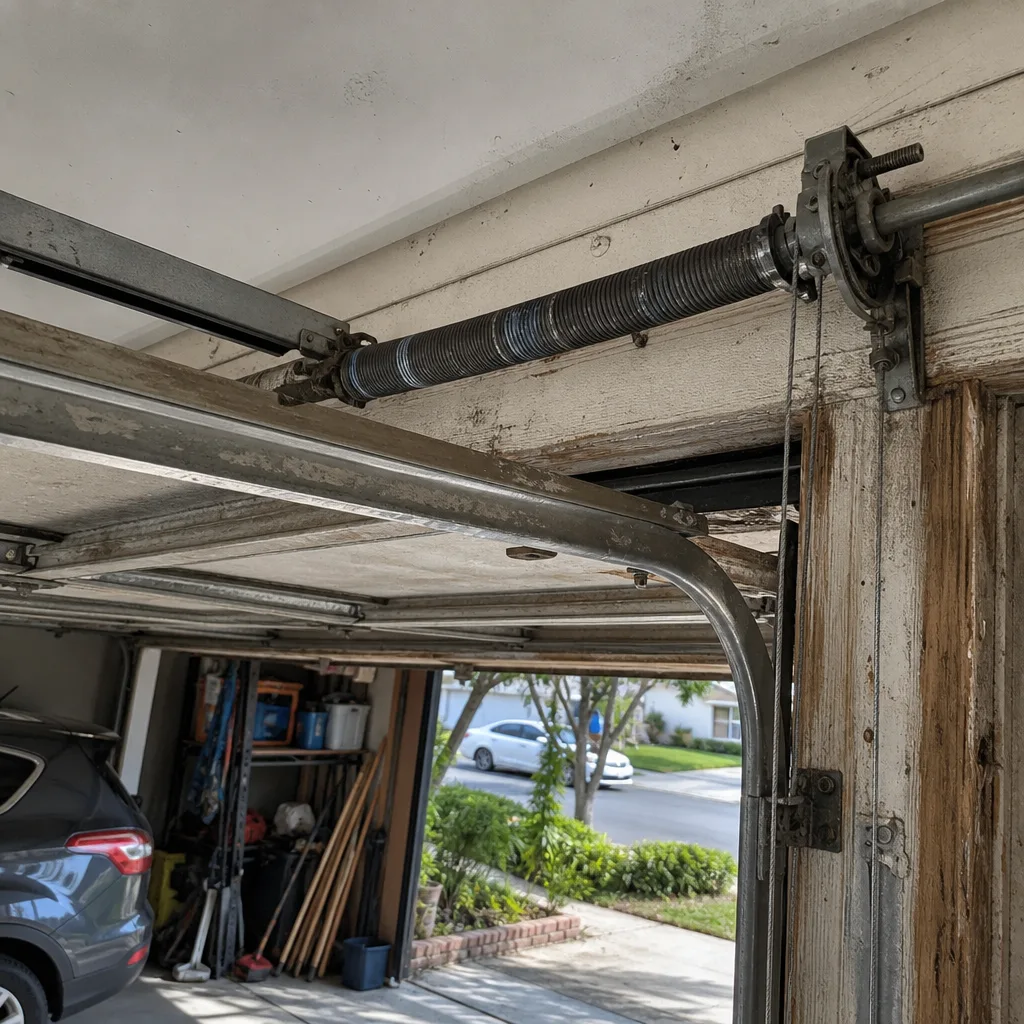 Before
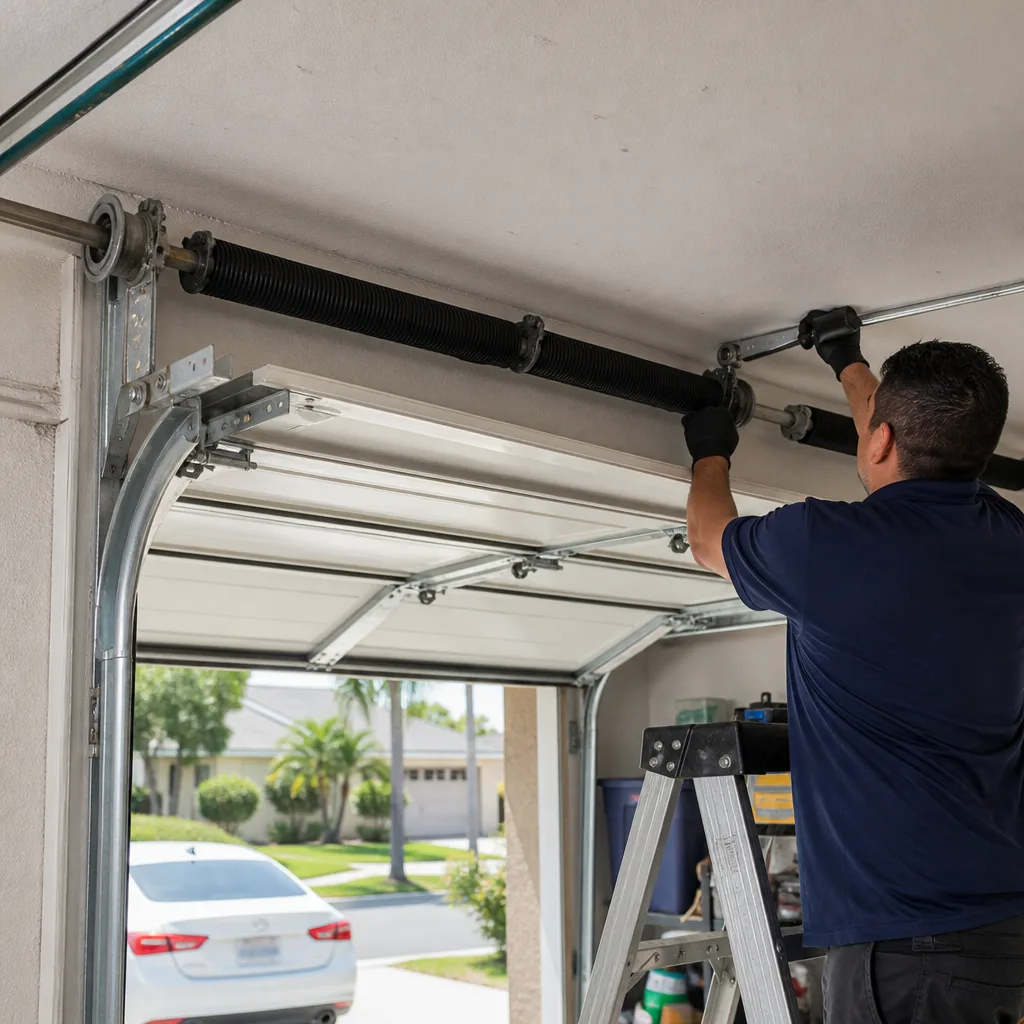 After
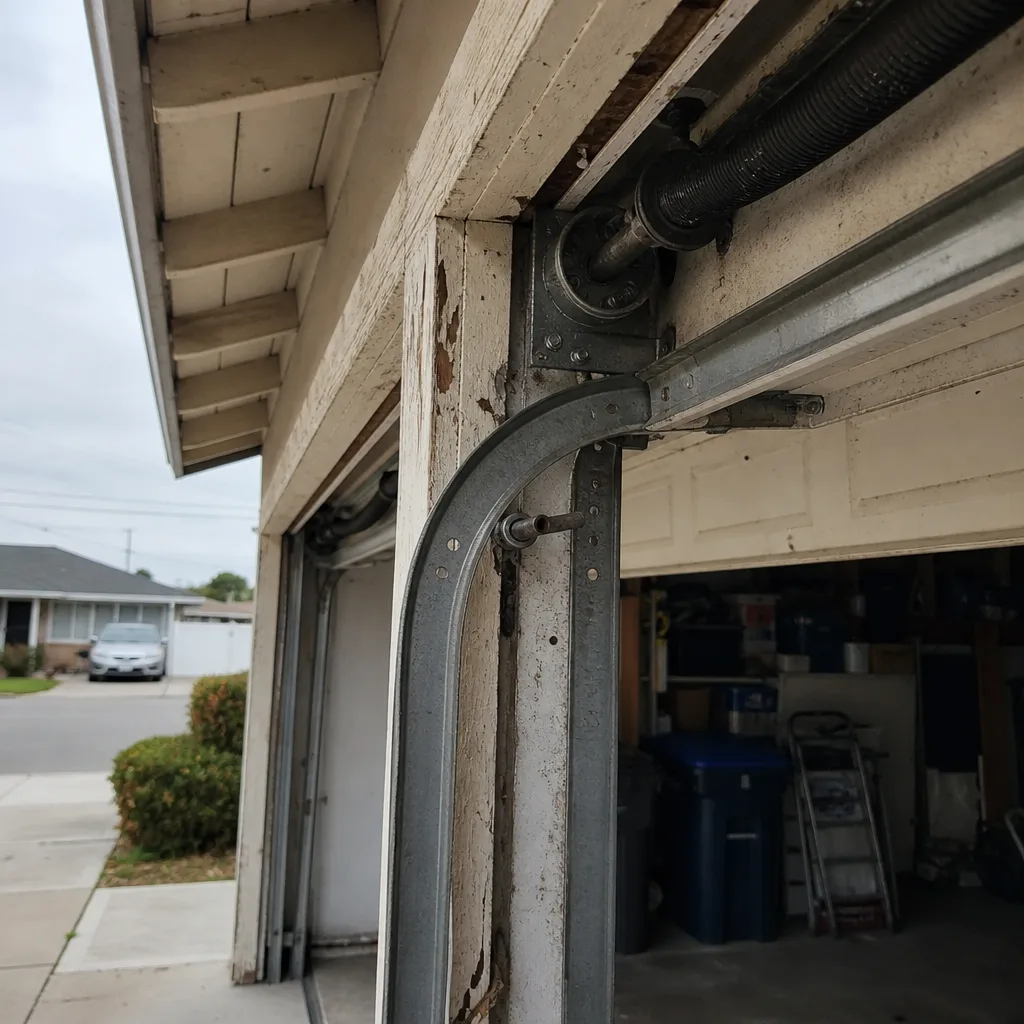 Before
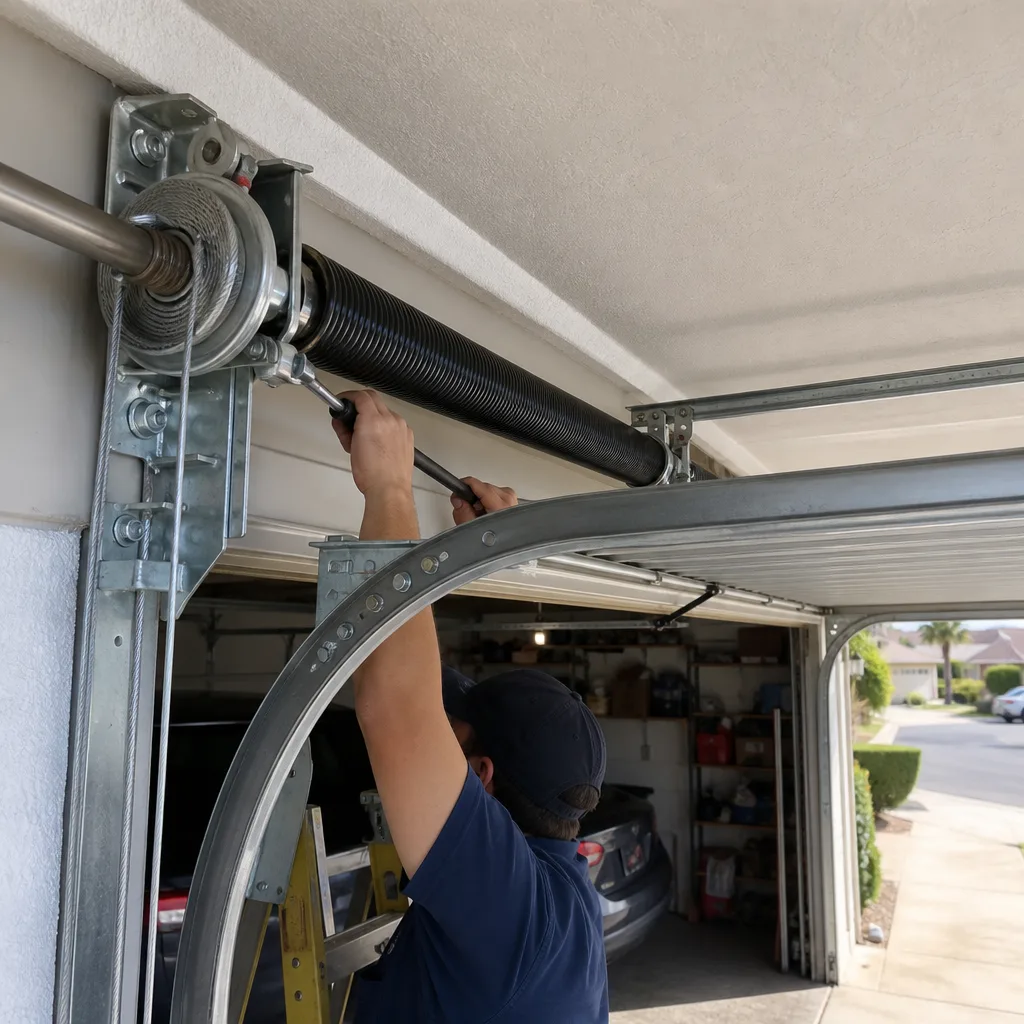 After
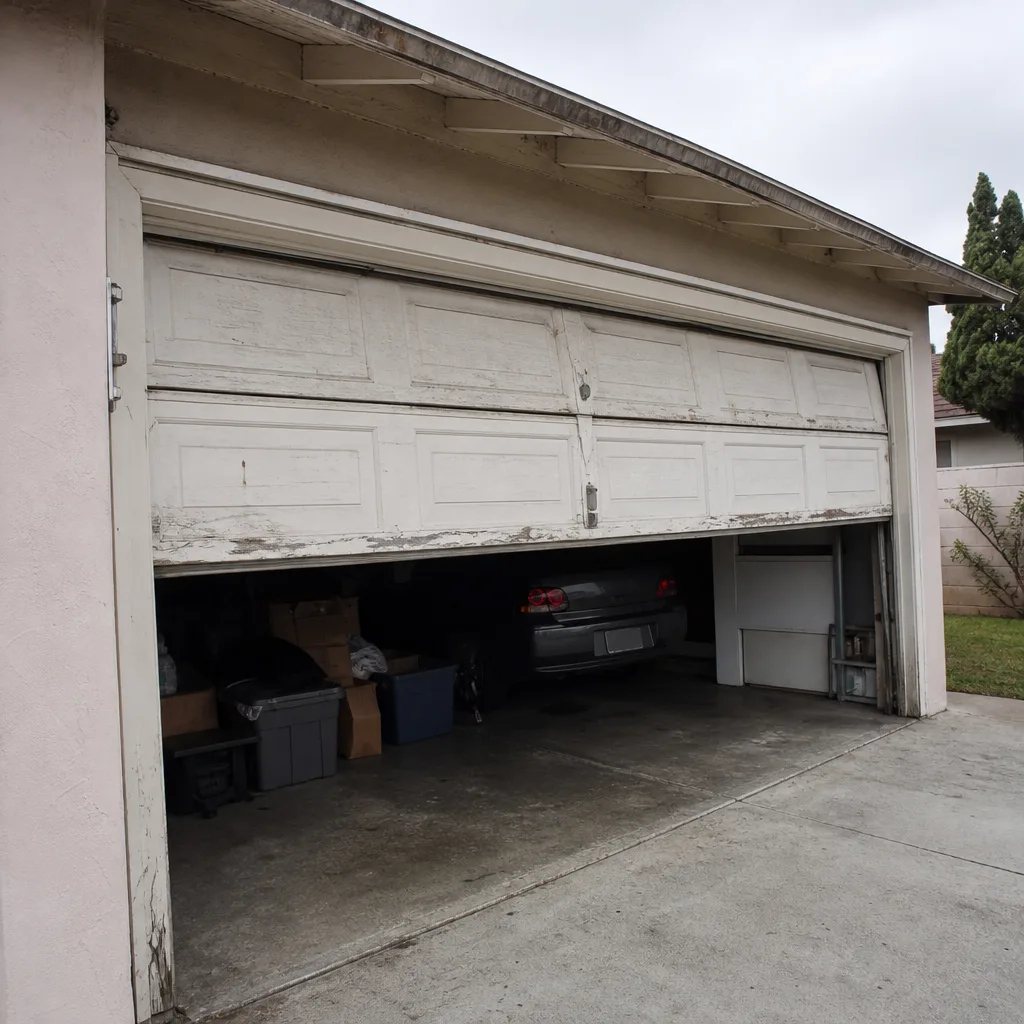 Before
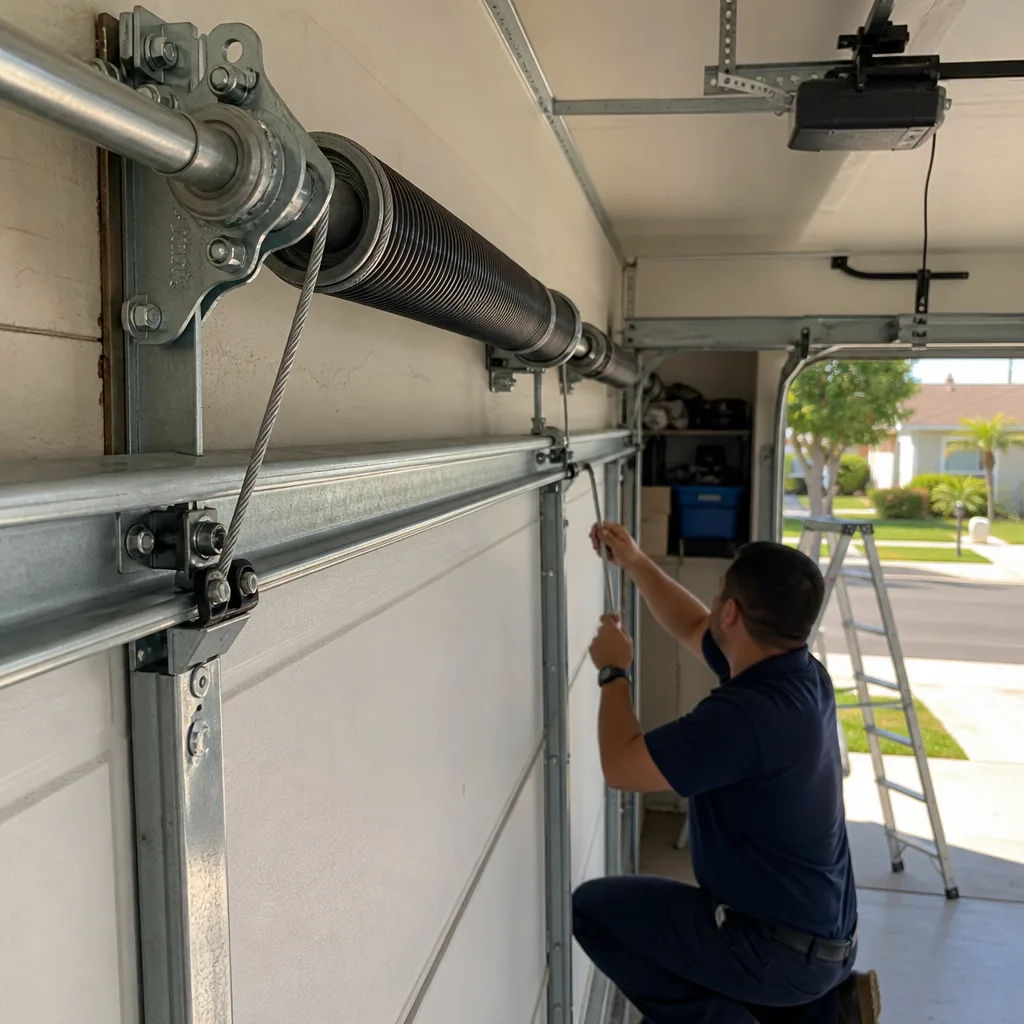 After
When to Call a Professional
You should call a professional whenever the work involves torsion springs, any structural modification, or an opener installation that requires electrical changes beyond plugging into an existing outlet. These are not areas where watching a video replaces experience. The professional you call should be able to answer the permit question immediately, with a code reference, and should have working familiarity with your existing door’s brand and configuration. If they can’t tell you whether your project needs a permit, they’re not the right contractor. Royal Garage Door Co offers free estimates in Santa Ana – call (866) 808-7312. We know the permit thresholds for Santa Ana and we know your brand, whether it’s a Clopay, an Amarr, a Wayne Dalton, or something else entirely. One call, one visit, one solution.
Frequently Asked Questions
No, if the replacement is like-for-like with a door of similar weight, size, and energy performance in the existing opening. Yes, if the new door is significantly heavier, the opening is being modified, or the home is in a designated historic district. Our team at Royal Garage Door Co home has handled hundreds of Santa Ana replacements and confirms the permit requirement before work starts.
A typical garage door permit in Santa Ana costs between $80 and $250, based on project valuation. Structural modifications that require engineering review can add $100 to $200 in plan review fees and $500 to $1,500 for stamped structural calculations. Call the Building Safety Division at 20 Civic Center Plaza for an exact figure on your project.
Yes, replacing an existing opener with a new one plugged into the same outlet is generally permit-exempt. Adding a new electrical circuit or moving the outlet to a new location requires an electrical permit. The opener itself must meet UL 325 safety standards regardless of whether a permit is required.
Title 24 is California’s energy code. It applies to your garage door if the garage is attached to conditioned living space and the door is part of the home’s thermal envelope. In those cases, the replacement door must meet minimum insulation requirements, typically an R-value of R-12 or higher for Santa Ana’s climate zone.
The contractor is legally responsible for pulling permits on work that requires them, under California Business and Professions Code Section 7044. However, the permit remains attached to the property, and the homeowner carries the long-term liability for unpermitted work. Verify the permit exists before work begins, regardless of what the contractor says.
You can, but you’ll likely lose money in the negotiation. Buyer’s inspectors flag unpermitted work, lenders may condition financing on retroactive permits, and sellers often end up paying far more than the original permit cost in price reductions. A $200 permit skipped today can become a multi-thousand-dollar concession at escrow.
The Bottom Line
California’s garage door permit rules are not intentionally confusing, but they’re specific enough that most homeowners misunderstand them. Repairs and like-for-like replacements don’t need permits. New installations, structural changes, and significant weight increases do. Title 24 adds insulation requirements for attached garages. UL 325 governs opener safety. The contractor pulls the permit, but the homeowner carries the liability. In Santa Ana, the fastest way to know where your project falls is a phone call to the Building Safety Division or a conversation with a contractor who actually knows the thresholds. For more guides & resources, or if you’re in Santa Ana and want a straight answer on your specific project, call us at (866) 808-7312. You’ll get a free estimate and a clear response on whether a permit is required. That clarity costs you nothing, and it can save you thousands down the road.
Written by the team at Royal Garage Door Co, serving Santa Ana since 2016.