Last updated October 31, 2026
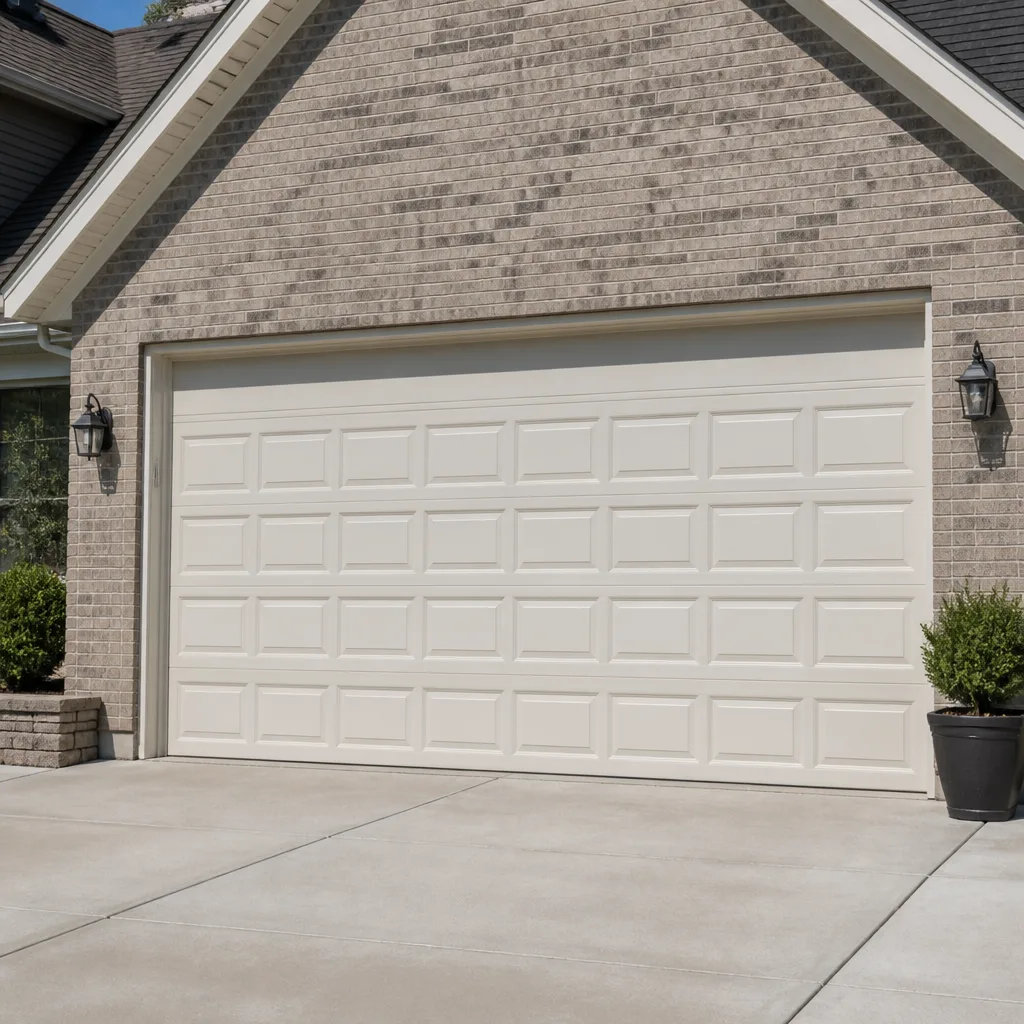 Raised-panel steel
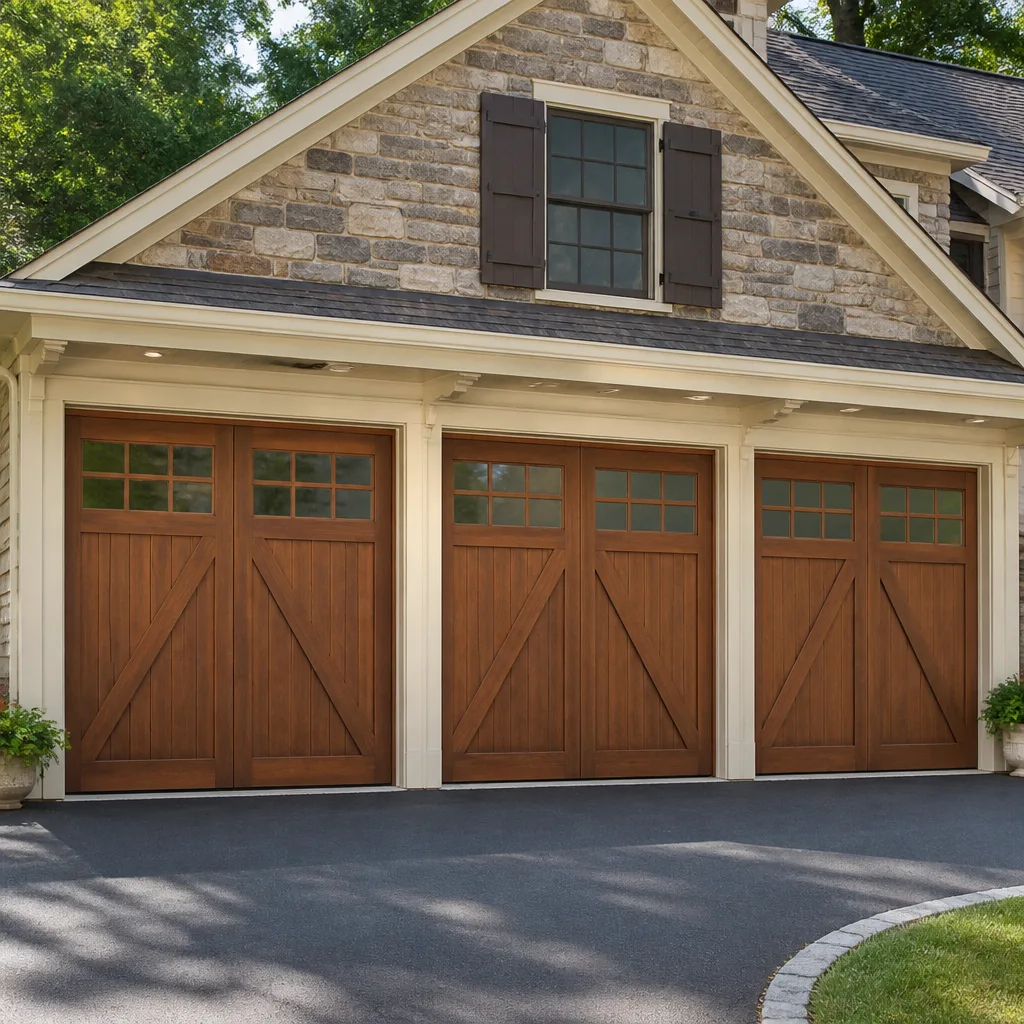 Carriage house
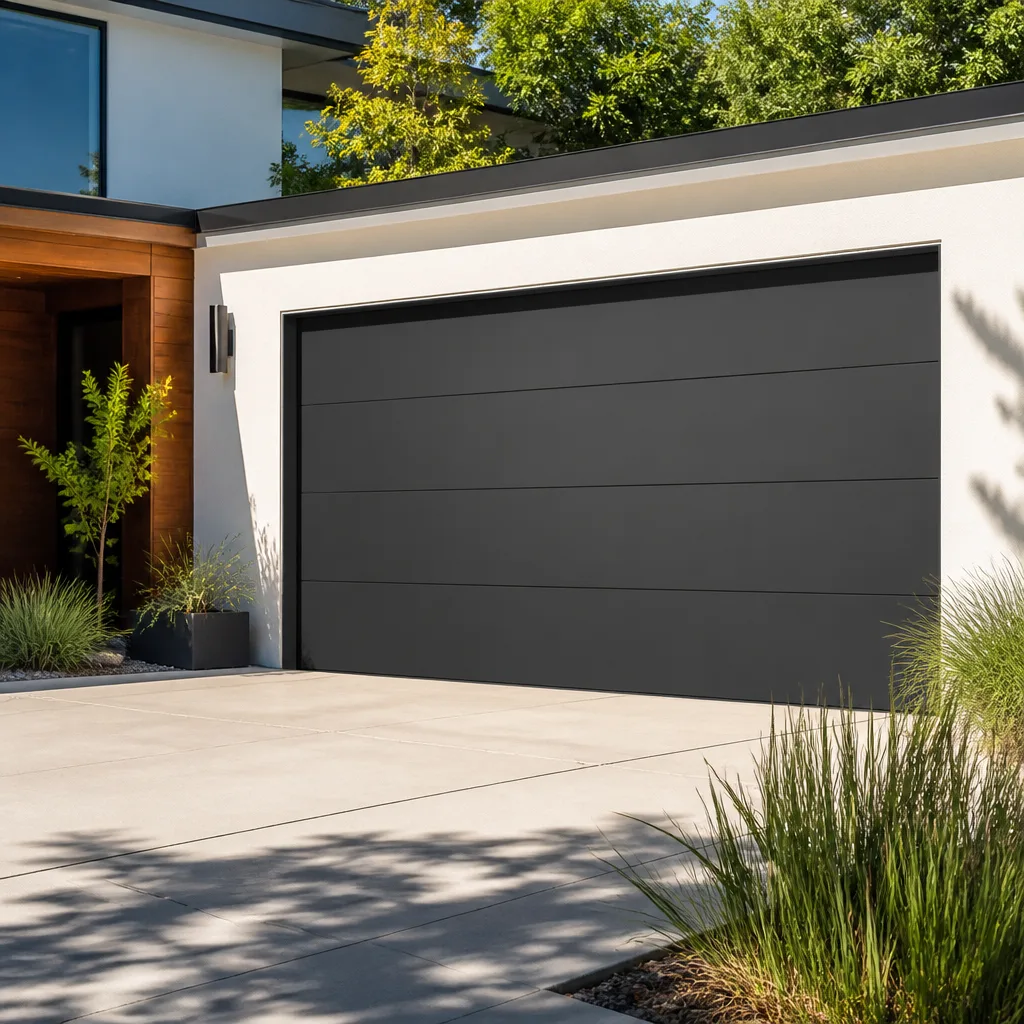 Modern flush
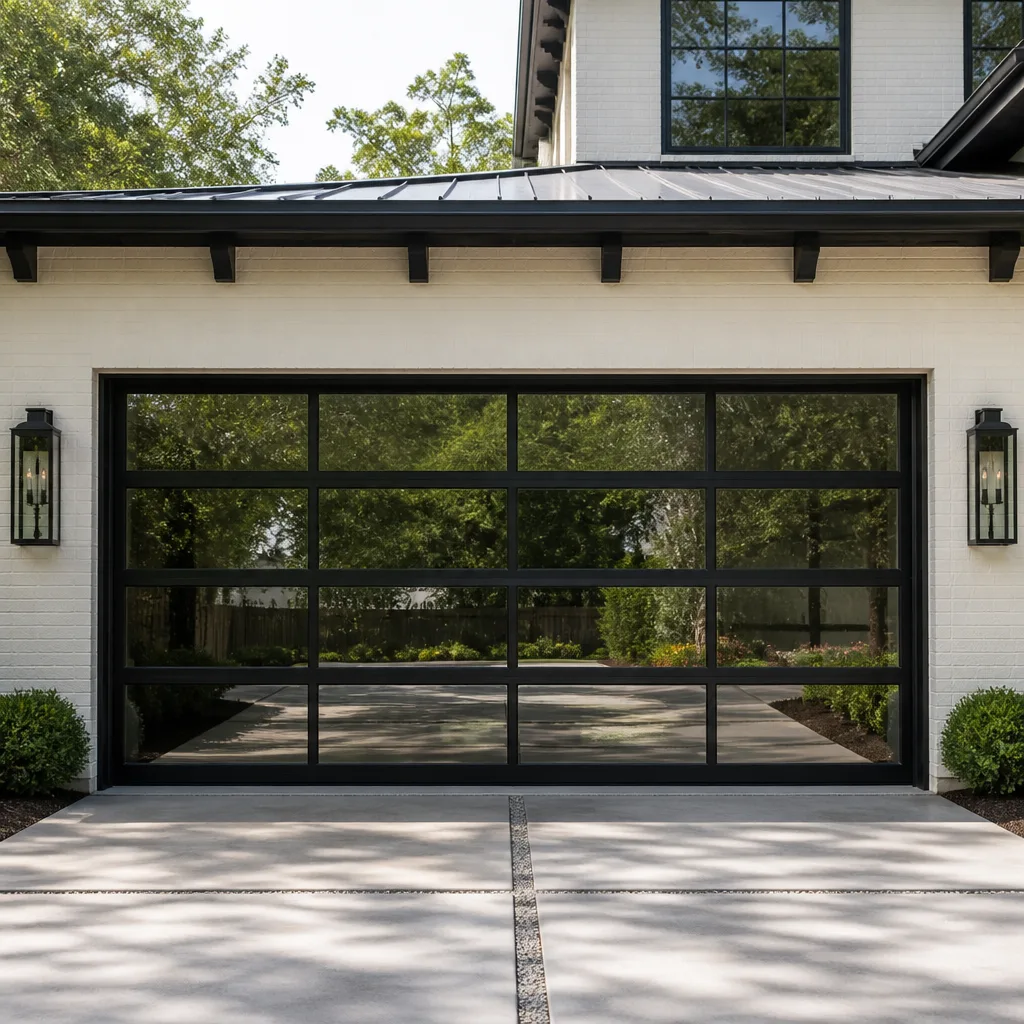 Full-view glass
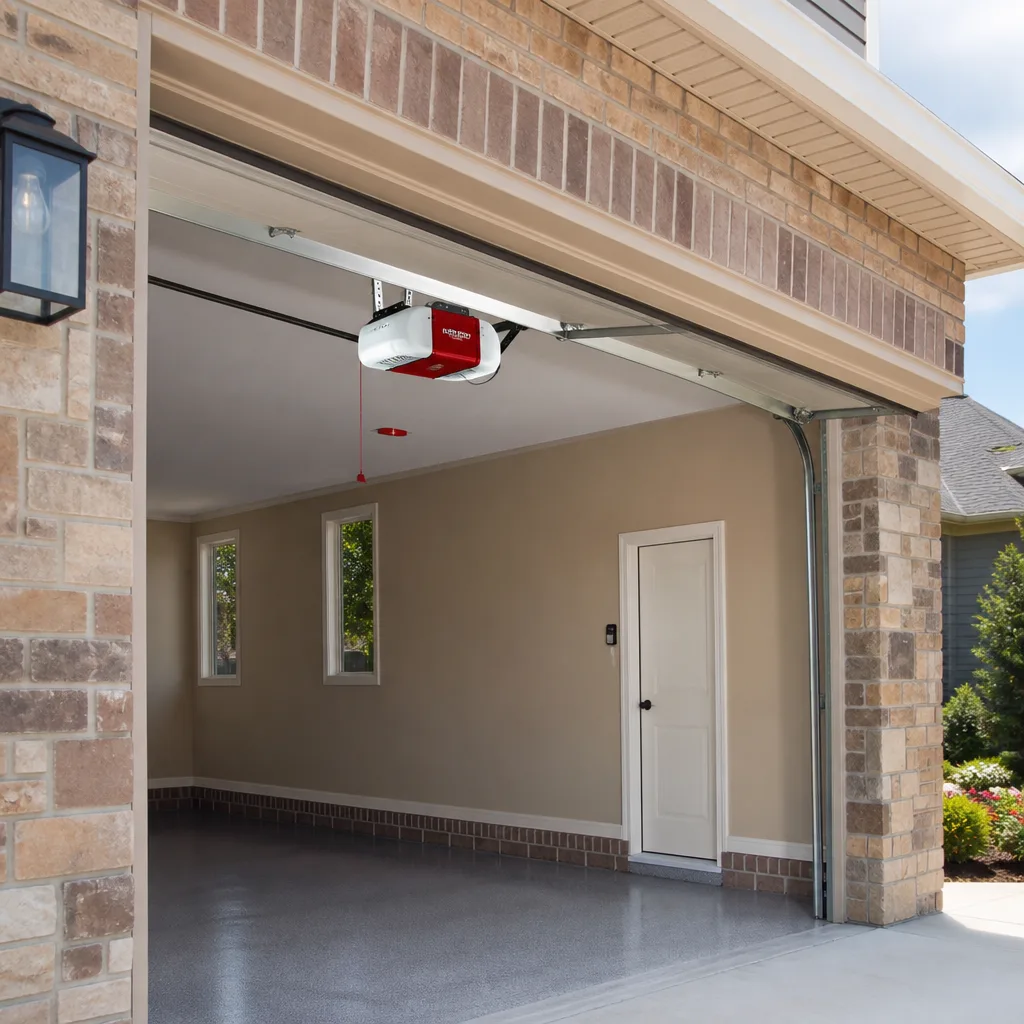 LiftMaster openers
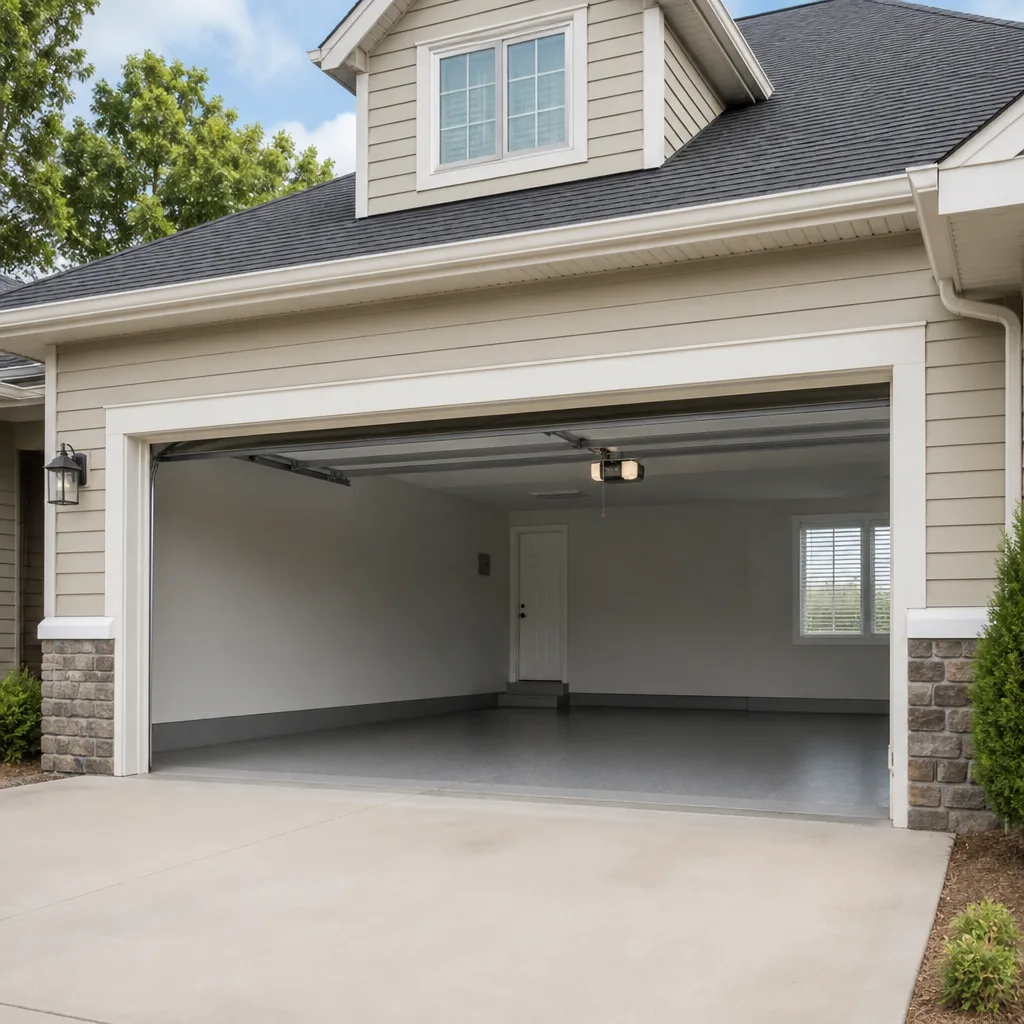 Chamberlain openers
Full 25-point door and opener safety check with every visit - springs, cables, rollers, tracks, and your LiftMaster or Chamberlain opener included
You get a price before we start. It does not change when the truck arrives.
Get your free estimateGarage Door Warning Signs: A Santa Ana Homeowner’s Reference Guide
That grinding noise your door makes on cold mornings isn’t “just how it sounds in winter.” It’s a torsion spring telling you it has about 200 cycles left. Every garage door installed in a Santa Ana home will fail at some point – but very few fail without warning. The problem is that most homeowners don’t speak the language their door uses in the weeks and months before a breakdown. This guide — alongside our Seasonal Garage Door Care for Santa Ana: Year-Round Homeowner’s Guide — translates those warnings: the specific sounds that mean different things, the visual cues visible from ground level, which doors use which signals, and exactly how long you have to act after noticing each one. By the time you finish reading, you’ll know more about reading your garage door’s health than most people who’ve owned one for twenty years.
Quick Answer
The most common garage door warning signs are a grinding noise from the spring area, a door that sags or hangs unevenly on one side, cables that look frayed or loose, slow or hesitant movement when opening, and an opener that runs but struggles. In Santa Ana, most serious failures – snapped springs, derailed doors, burned-out opener motors – announce themselves 60 to 90 days before they happen. You can catch nearly all of these early by doing a 3-minute visual and audio check once a month.
Styles & brands we work with
Table of Contents
- Sound-Based Diagnostics: What Different Noises Actually Mean
- Visual Warning Signs You Can Spot from Ground Level
- Response Time Guide: 30 Days, One Week, or Stop Using the Door
- The Unbalanced Door Problem That Accelerates Opener Failure
- Brand-Specific Warning Signs: LiftMaster, Chamberlain, and Genie
- How Santa Ana’s Climate Affects Garage Door Wear
- Your 3-Minute Monthly Door Check: A Step-by-Step Walkthrough
- Common Mistakes to Avoid
- When to Call a Professional
- Frequently Asked Questions
Sound-Based Diagnostics: What Different Noises Actually Mean
Your garage door speaks to you every time it opens and closes. The trick is knowing which sounds are harmless background noise and which are mechanical distress signals. In our experience working on doors throughout Santa Ana, homeowners almost always describe the same four sounds before a failure. Here’s what each one means.
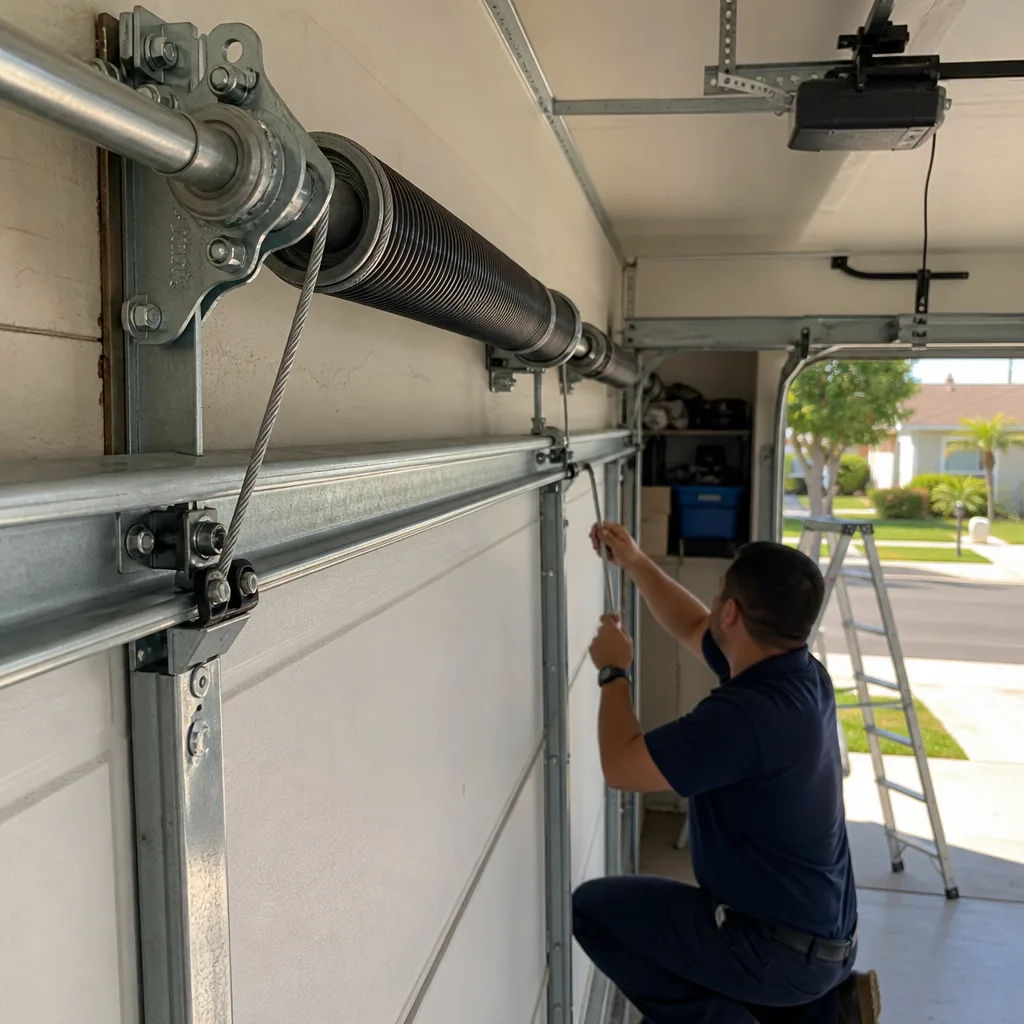
The grinding sound near the spring bar: If you hear a metallic grinding or groaning from directly above the door when it moves, that’s almost always a torsion spring binding against itself. Torsion springs sit on a metal shaft above the closed door. As they age – typically after 10,000 to 15,000 cycles – the coils start losing internal lubrication and the metal rubs against itself. You’re hearing metal fatigue. A spring that grinds is a spring that’s close to snapping, and a snapped spring under tension can release violently. Don’t try to lubricate it yourself if the accessible hardware is under tension. If you hear this sound, your spring has weeks, not months, left.
The rumble or thumping sound from the rollers: A rhythmic rumbling as the door moves along the track usually means one of the rollers is wearing out. Worn rollers either get flat spots (which causes the thump-thump-thump pattern as they roll) or the bearing inside breaks down, letting the wheel wobble. Rollers are cheap and fast to replace – but left alone, a seized roller can jump the track, and a derailed door is a serious hazard. This is a same-week repair, not a same-day emergency in most cases.
The screech or squeal from the edges: A high-pitched squeal that happens every time the door passes the same point on the track is usually metal-on-metal contact. The most likely culprits are dry hinges, a misaligned track, or a roller that’s lost its bearing grease. You can spot the source by standing inside the garage and watching the edges while someone else runs the door. In our Santa Ana service calls, dry rollers and hinges are the most common causes of door noise we fix – and it’s one of the few maintenance items a homeowner can address safely.
The buzz or hum from the opener unit: If you hear a buzz or hum that sounds electric, coming from the motor housing on the ceiling, that’s usually the opener’s internal gear wearing down. Many opener models – especially LiftMaster and Chamberlain units – use a plastic gear that strips over 5 to 8 years of daily use. The opener runs, the motor turns, but the gear can’t grip, so the door either doesn’t move or shudders when it tries. A buzzing opener with a door that won’t move is telling you the gear is stripped. Our team handles garage door opener repair in Santa Ana regularly, and stripped gears are among the top three opener failures we diagnose.
Visual Warning Signs You Can Spot from Ground Level
You don’t need a ladder or any technical knowledge to spot most visual warning signs. A 90-second walk around your closed door, looking at the same five things every month, catches a surprising amount of trouble early. Here’s what to look at – all from ground level, where it’s safe.
1. The cables on each side. Your door has two lift cables, one running down each side. They look like braided steel wires. If one looks loose, wavy, or you can see individual strands poking out, the cable is fraying. A frayed cable under load is dangerous. What’s especially telling: if one cable looks tight and the other sags, that usually means the spring above has lost tension on that side, and the tight cable is now carrying more load than it’s rated for. Cable issues are a stop-using-the-door scenario.
2. The gap along the bottom. Close the door and look at the line where the door meets the garage floor. If you see daylight or an uneven gap, your bottom seal is compressed, torn, or the door itself isn’t sitting level. The bottom seal is the part most exposed to Santa Ana’s summer heat – rubber and vinyl dry out and crack here faster than on any other component of the system.
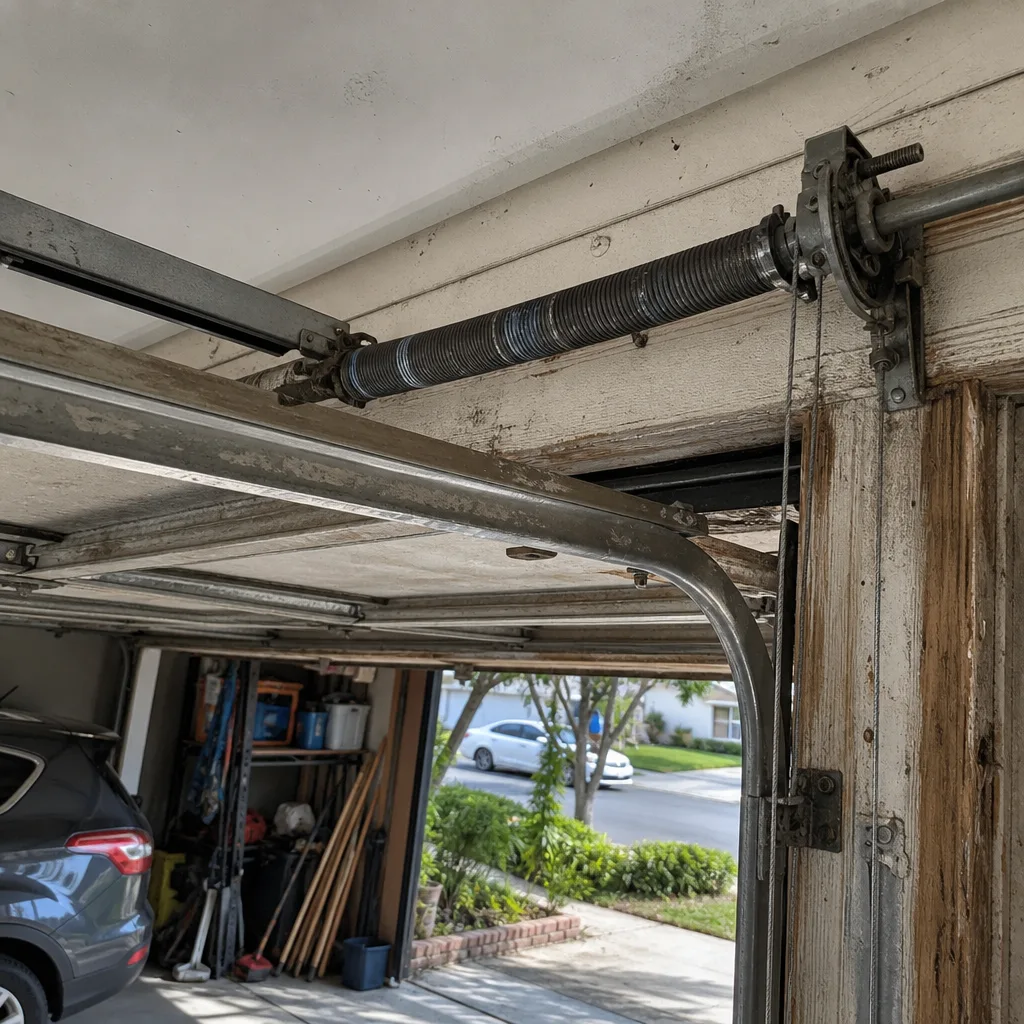
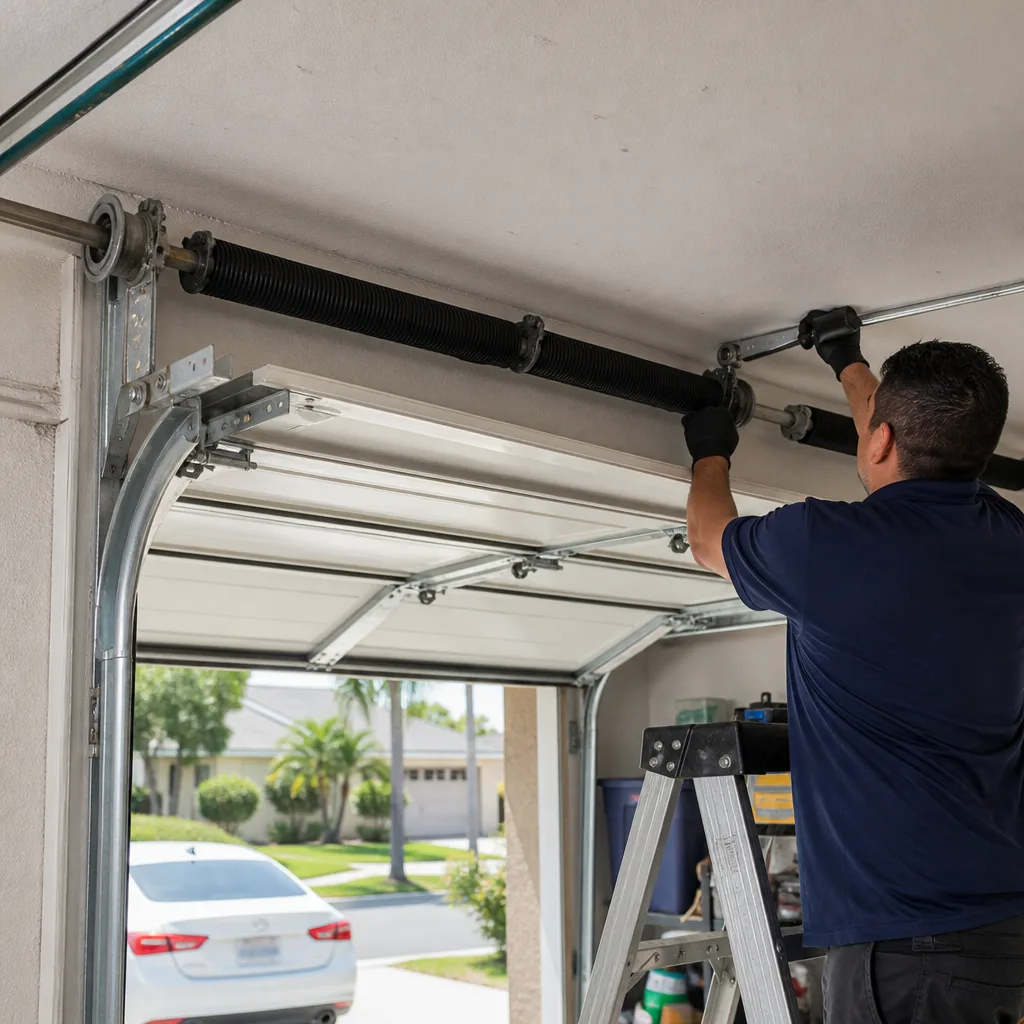
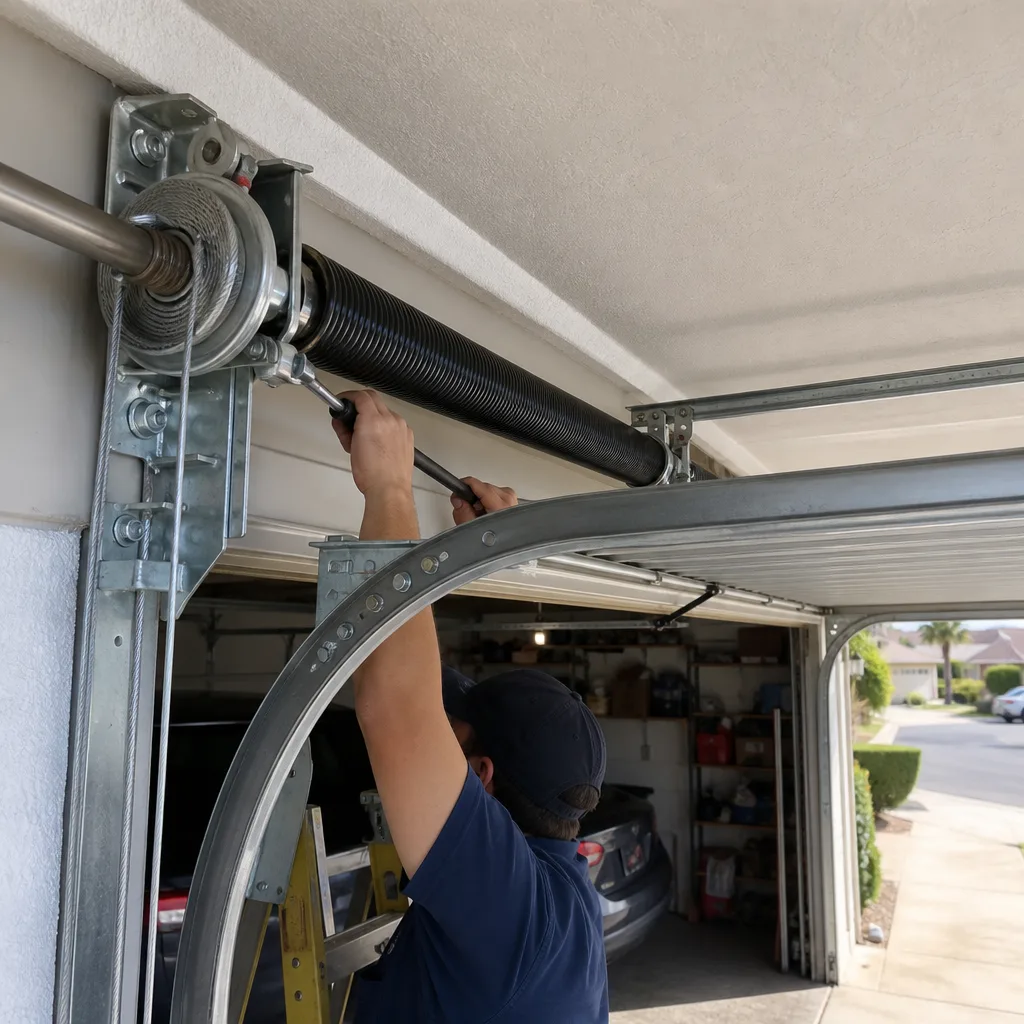
3. The spring above your closed door. Stand inside the garage and look at the spring (or springs – you may have one or two) on the metal bar above the door. If you have two springs and one looks clean while the other is coated in a fine rub mark or crack, that’s a visual warning that the clean one snapped and was replaced while the other is original and failing. More importantly: if you can see a gap in the coil – a separation where two coils have pulled apart – the spring is broken. A broken spring means the door will not open safely and may not open at all.
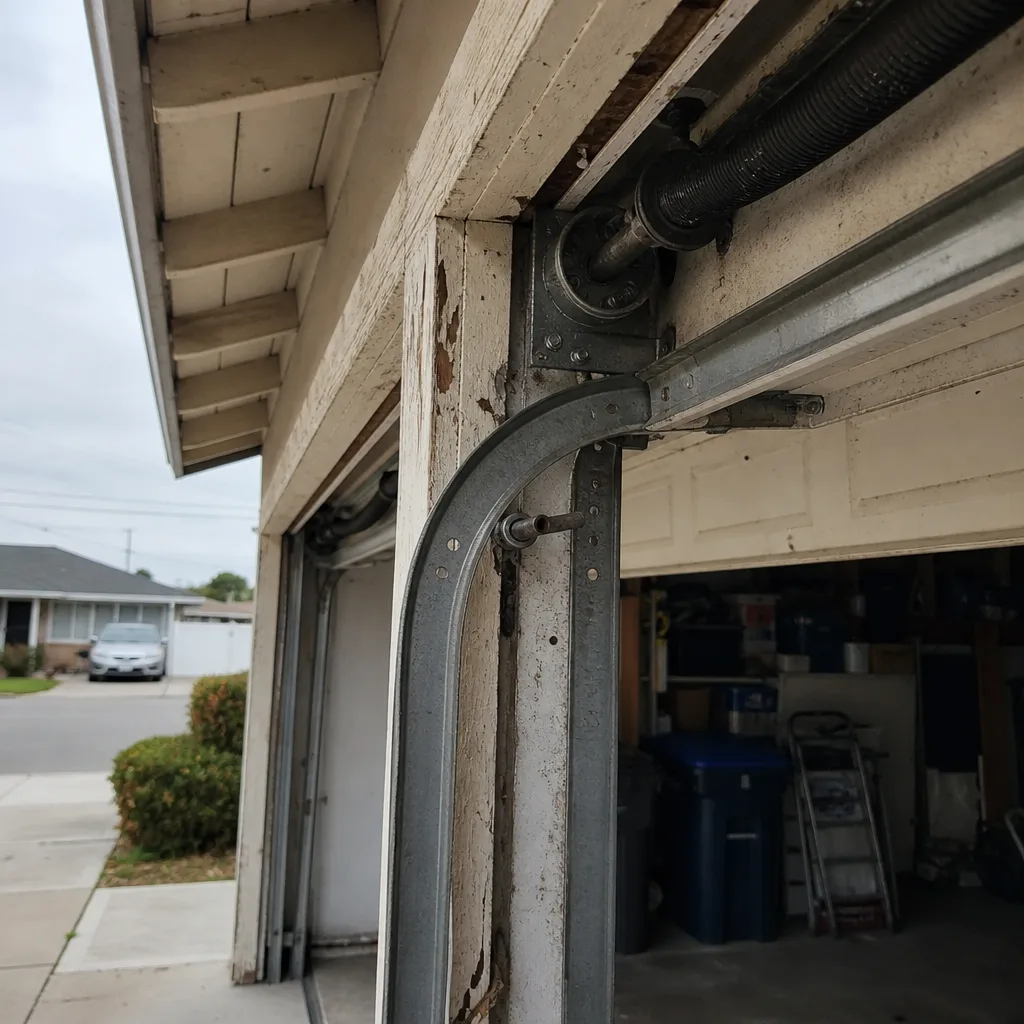
4. The track alignment. Look at the vertical tracks on each side. They should be straight and evenly spaced from the door edge. If one track leans inward or the gap between track and door is wider at the top than the bottom, the door is pulling unevenly. Misaligned tracks cause uneven wear everywhere else, and they’re often the first sign a door is on its way to a bigger failure.
5. The bolt heads and hinges. Every hinge and bracket has bolts. If you see a bolt with a ring of rust or a dark stain running down from it, that hardware is moving under load. Loose bolts don’t just happen – they mean the door has been cycling with extra resistance, and something is putting stress where it shouldn’t be.
Response Time Guide: 30 Days, One Week, or Stop Using the Door
Not every warning sign needs an emergency call. Some allow you to schedule service at a convenient time, some need attention within the week, and some mean the door should be considered out of service immediately. Here’s how we tell Santa Ana homeowners to triage what they’re seeing or hearing.
Can wait up to 30 days – schedule at your convenience
- Gradual slowdown: The door takes a second or two longer to open or close than it did six months ago, but it still works every time.
- Occasional squeak: A hinge or roller squeaks on certain days or in certain weather, but stops when you ask the door to cycle a second time.
- Worn bottom seal: The rubber strip along the bottom is cracked or compressed, letting in some dust or heat, but the door opens and closes normally.
- Cosmetic rust on bolts: Any rust is worth checking, but if the bolts are still tight, this is a maintenance item you can address at a planned visit.
Schedule within the next 7 days – don’t wait a month
- Intermittent opening failure: The door occasionally stops halfway for no obvious reason, and reverses or retries on its own.
- Rumbling rollers: A rhythmic thumping when the door moves means a roller with a flat spot or a failing bearing.
- Loose or sagging cable: One cable has visible slack while the other is taut. The spring system is starting to fail on one side.
- Dry or grinding spring sound: A grinding noise directly above the door is your spring warning you it’s running on borrowed time, as covered earlier.
Stop using the door immediately – call same day
- Snapped spring: You see a visible gap in the coil or you heard a loud bang from the garage and the door now won’t lift or lifts only a few inches.
- Frayed or snapped cable: If you can see individual strands poking out of the cable, or a cable is hanging loose, do not operate the door.
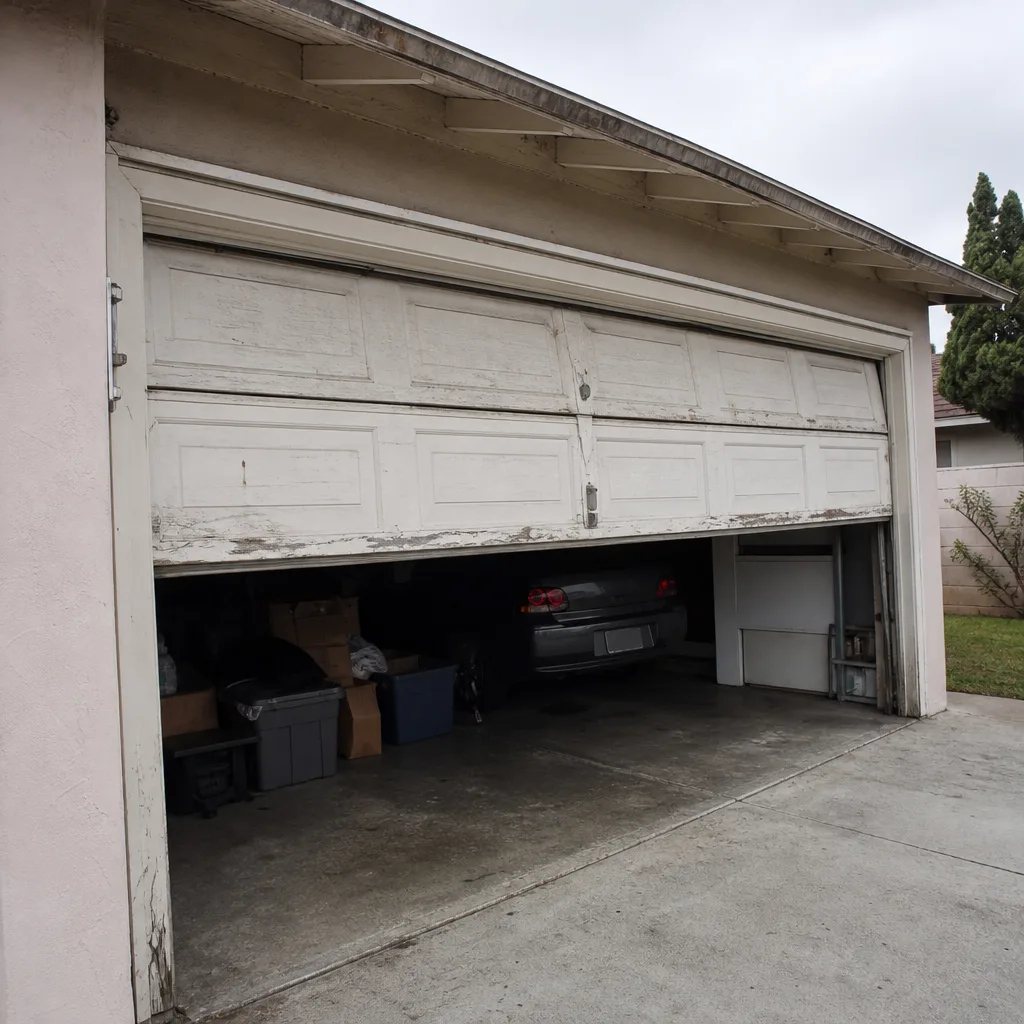
- Door off-track: The door visibly leans to one side, one roller sits outside the track, or the door jams and won’t move in either direction.
- Opener won’t reverse from a contact: If you close the door on an object and it doesn’t reverse, the safety reversal system has failed. That’s a physical safety issue, not a scheduling preference.
The biggest mistake we see: homeowners who hear the grinding spring for weeks, decide to “keep an eye on it,” then call us in a panic at 7 a.m. when the spring snaps and the door is stuck open with a car inside. The 30-day, one-week, and stop-use buckets above directly answer the question “how urgent is this really?” – because a misread signal costs more than the repair itself.
The Unbalanced Door Problem That Accelerates Opener Failure
Here’s a failure pattern most Santa Ana homeowners never learn about until it costs them a new opener. It starts with a weakening spring. As a torsion spring ages, it loses tension. As the spring loses tension, the door gets progressively heavier to lift. Your opener motor – designed to assist a balanced door, not dead-lift a heavy one – starts working harder on every cycle. The motor runs hotter, the internal gear wears faster, and the belt or chain stretches. Eventually the opener burns out. By the time you notice the opener struggling, the spring that caused the problem may have been failing quietly for months.
This compounding failure is why a door that’s “always been a little slow” eventually becomes a door that won’t open at all, and the repair bill includes both a new spring and a new opener. The opener wasn’t defective – it was overloaded. The fix would have been a $200 spring replacement; the result of waiting is often a $500+ opener replacement.
How do you catch it early? Two ways. First, disconnect the opener from the door (there’s usually a red release handle) and lift the door by hand. A properly balanced door lifts with one smooth motion, stays where you put it around waist height, and lowers gently. A door that feels heavy, drops quickly, or drifts upward is out of balance. Second, watch the door as it closes: a balanced door moves evenly. If one side leads, or the door shudders as it travels, the tension is uneven. Our garage door repair in Santa Ana includes this balance check on every visit, because it’s the single best early indicator of a bigger problem forming.
One more thing to know: this pattern is especially common in two-spring systems, because when one spring snaps, homeowners often replace just the broken one. That leaves one new spring and one old spring, and the door immediately runs unbalanced. A professional should always replace both springs in a two-spring system, even if only one has failed.
Brand-Specific Warning Signs: LiftMaster, Chamberlain, and Genie
Not all openers fail the same way. When we run service calls in Santa Ana, we see clear patterns by brand. Here’s what’s common for the three openers most often installed in local homes.
LiftMaster and Chamberlain openers
LiftMaster and Chamberlain are actually the same parent company, and their openers share a lot of internal design. The most common failure we see on these units is the plastic drive gear inside the motor housing. Symptoms: the motor hums, the chain or belt doesn’t move, and the door doesn’t budge – or it shudders and moves a few inches before stopping. The gear strips over time and strips faster on doors that are heavy or out of balance. A second common LiftMaster/Chamberlain warning sign is the opener light blinking a diagnostic code after a failed cycle. Count the blinks and look them up in the manual – that’s the unit telling you what’s wrong before you call for help. If you’re not sure how to read the code, our opener specialists can decode it over the phone. We work on these brands every day, factory-familiar and without needing to sell you a replacement unit.
Genie openers
Genie openers have a different failure profile. The most common issue we see is capacitor failure in the motor start circuit – the opener buzzes and won’t start, especially on colder mornings. The second most common is the carriage assembly, which Genie mounts on a screw-drive rail on many models. Over time the carriage wears, and you’ll hear a chattering or rattling noise as the door travels. A third signature: many Genie units use an infrared safety sensor system that’s sensitive to direct sunlight. Santa Ana gets a lot of it. If your Genie door refuses to close on bright afternoons and works fine at night, sunlight interference may be the culprit – align or shade the sensors and the problem often clears. These are opener-specific repairs, and that’s where a lot of general door shops lose interest. We don’t – opener repair is one of our three core specializations.
A note on Raynor doors
Raynor doors (and openers) are less common than the big three in Santa Ana, but we service them regularly. Raynor’s residential doors are generally high quality, and the warning signs they show are the same physical cues covered in the visual section above – cable wear, spring gap, and hinge movement. The brand-specific note worth knowing: some Raynor models use a proprietary spring-style configuration, and generic replacement parts from a big-box store won’t fit properly. This is exactly where brand-specific knowledge matters. A technician who doesn’t know the Raynor spring system may install a “close enough” part that works for a season, then causes an unbalanced door. Our team is trained across eight major brands – LiftMaster, Chamberlain, Genie, Clopay, Amarr, Wayne Dalton, Craftsman, and Raynor – so the right part gets ordered the first time.
How Santa Ana’s Climate Affects Garage Door Wear
Garage doors in Santa Ana live a different life than doors in Phoenix or Seattle. Specific climate factors here impact which components fail and how quickly. Understanding them helps you predict what to watch for in your own garage.
Santa Ana winds and the fine dust they carry. If you’ve lived here through a Santa Ana wind event, you know the air gets dry and carries fine particulate. That dust settles in your garage and works its way into everything that moves – roller bearings, hinge pins, and the track. Over time, that grit acts like sandpaper. It accelerates roller wear and is one reason we replace rollers in Santa Ana homes more often than in coastal Orange County. A monthly wipe-down of your tracks and a visual check of roller condition does more for door longevity here than in most climates.
Mild winters mean springs age on a schedule, not a season. In places with real winter, doors see less use in cold months. In Santa Ana, your door gets used roughly the same number of times every month, year-round. That consistency is actually predictable: a door cycled four times a day hits 10,000 cycles in about seven years. Most torsion springs are rated for 10,000 cycles. So a seven-year-old spring in a heavily used Santa Ana door is living on borrowed time, regardless of how it looks.
Summer heat bakes seals and plastic components. Your bottom seal, weatherstripping, and any plastic roller or bushing are all made of materials that degrade faster in sustained heat. A Santa Ana summer with multiple weeks above 90°F dries out rubber and PVC much faster than a mild coastal climate. This is why we recommend checking the bottom seal every spring, before the heat arrives, and replacing it if it’s cracked or compressed – it’s an inexpensive fix that keeps dust, pests, and heat out of the garage.
Your 3-Minute Monthly Door Check: A Step-by-Step Walkthrough
The whole point of this guide is to make you fluent enough in your door’s warning signs that you catch problems early. Here’s the monthly routine we recommend to our Santa Ana customers. It takes about three minutes and requires no tools and no ladder.
Step 1: Listen to a full cycle
- Stand in the center of the garage, one step away from the door.
- Look above the door and locate the metal bar holding the spring or springs.
- Open and close the door completely one time.
- Listen for grinding, rumbling, squealing, or unusual buzzing.
- Note where the sound comes from: above the door (spring), the edges (rollers, hinges), or the ceiling (opener).
Step 2: Look at the cables and springs
- Keep the door closed.
- Stand inside the garage and look at the cable running down each side.
- Check that both cables look equally tight and that no individual wire strands are poking out.
- Look at the spring above the door. Is the coil continuous, or can you see a gap? A gap means a broken spring.
Step 3: Watch the door travel
- Open the door and watch it. Does it move smoothly, or does it jerk, stutter, or hesitate?
- Does the door sit level when open? Walk under it and look at the bottom edge.
- Close the door and watch the bottom edge as it meets the floor. Even contact?
Step 4: Check balance by hand
- Close the door.
- Pull the red emergency release handle hanging from the opener rail (this disconnects the opener).
- Lift the door by hand to waist height.
- Let go. The door should stay roughly where you put it. If it drops or shoots up, the spring is out of balance.
- Reconnect the door to the opener by pulling the release handle again and running the opener until it re-engages.
Step 5: Test the safety reverse once per season
- Close the door. Before it reaches the floor, place a rolled-up towel or a small cardboard box in its path.
- The door should reverse within two seconds of touching the object.
- If it doesn’t reverse, the safety system is failing. This is a stop-use item until fixed.
If any single check turns up something off, it’s worth a phone call. The earlier a problem is caught, the smaller the fix. We’d rather spend five minutes on the phone telling you something is fine than have you ignore a sign for three months.
Common Mistakes to Avoid
- Spraying WD-40 on the spring or track. WD-40 is a water displacer, not a lubricant. It actually strips away whatever grease remains. For rollers and hinges, use a white lithium grease or a silicone spray. For torsion springs, leave lubricating to a professional unless you’re confident you can do it safely from the ground.
- Replacing only one spring in a two-spring system. It saves money today and guarantees an unbalanced door tomorrow. Both springs have roughly the same cycle count if they were installed together. Replace them as a pair.
- Ignoring a grinding noise because “the door still works.” That’s equivalent to ignoring a warning light on your car’s dashboard because the engine hasn’t failed yet. The door works until it doesn’t, and a spring that snaps while you’re underneath it is dangerous.
- Tightening or adjusting cables or springs yourself. Garage door springs are under enough tension to cause serious injury or death if mishandled. Leave any spring or cable adjustment to a professional. If the spring is broken, this warning doubles.
- Lubricating what should be replaced. A dry roller that’s already worn out won’t get better with spray. You’re just masking the symptom. A roller with a failing bearing or a flat spot needs to be replaced, not lubricated.
- Assuming a new opener will fix a heavy door. Installing a higher-horsepower opener to muscle a heavy, unbalanced door back into operation works for a while, then destroys the new opener’s gear the same way it destroyed the old one. Spring replacement is the actual fix.
- Leaving the door open when you go on vacation. In Santa Ana’s dusty, windy conditions, leaving a door open invites grit into everything that moves. It also leaves your home’s largest entry point exposed. A closed door with a balanced spring is the safest thing you can do for your system while you’re away.
When to Call a Professional
Call a professional if you hear grinding or banging from the spring area, if you see a frayed cable or a gap in the spring coil, if your door is visibly off-track or won’t move, or if your opener’s safety reverse doesn’t work. If the door is heavy to lift by hand after pulling the release, that’s unbalanced spring tension – also a professional fix. These are all signs that the door has moved past “maintenance” into “repair,” and many involve components under enough tension to cause serious injury to someone who doesn’t work with them every day.
If you’re in Santa Ana and something in this guide sounded familiar, Royal Garage Door Co offers free estimates on all repair and installation work. For how to hire a garage door contractor in Santa Ana: a step-by-step guide, see our companion post. Call (866) 808-7312 and describe what you’re seeing or hearing – we can often diagnose the issue over the phone before we ever send a truck out. We’ll give you an honest read on whether it’s urgent or can wait, and our price is quoted and agreed before any work starts.
Frequently Asked Questions
Garage door spring repair in Santa Ana typically costs $180 to $340 for a single spring replacement, and $300 to $550 when both springs in a two-spring system are replaced at the same time. The exact cost depends on the spring size, door weight, and whether the technician finds additional wear that should be addressed. Springs are the most common repair we make, and replacing them on schedule is always cheaper than replacing them after they snap and damage something else. Call (866) 808-7312 for an exact quote – estimates are free.
For emergency repairs like a snapped spring, a frayed cable, or a door stuck open or off-track, we prioritize same-day service in Santa Ana whenever possible. Call (866) 808-7312 as soon as you notice the problem, and we’ll give you an honest arrival window based on our current schedule. For non-emergency items like a worn roller or a noisy hinge, we’ll work around your schedule rather than rushing a visit you don’t urgently need.
No. Our price is agreed with you before any work starts, and that’s the price you pay. If we find additional issues during the visit, we’ll stop and show you what we found, explain what it costs, and you decide before we proceed. No surprise line items and no work that wasn’t pre-approved.
For the eight major brands we service – LiftMaster, Chamberlain, Genie, Clopay, Amarr, Wayne Dalton, Craftsman, and Raynor – our trucks carry the most commonly needed springs, rollers, cables, and other components. That means most repair visits are one trip for us and one visit for you. If your door needs a part we don’t carry, we’ll be upfront about it and schedule the return visit as quickly as possible.
A garage door opener in Santa Ana typically lasts 7 to 10 years with normal use, but its lifespan shortens dramatically if it’s paired with an unbalanced or heavy door. The most common opener failures we see – stripped gears and burned-out motors on LiftMaster and Chamberlain models, capacitor failures and carriage wear on Genie models – usually follow a long period of extra strain. If your door has become heavy to lift by hand, fixing the spring is a cheaper investment than replacing an opener a year from now.
A safe door is balanced, quiet, and reverses when it meets resistance. Disconnect it once a month, lift it by hand, and make sure it stays roughly in place at waist height. Watch that it moves evenly with no jerking or visible lean. Listen for grinding, rumbling, or buzzing. Look at both cables and the spring for fraying or a gap. If any one of those checks fails, call a professional before using the door again. If they all pass, your door is likely fine for another month.
The Bottom Line
Your garage door tells you when it’s failing – you just have to know what to listen and look for. Grinding means spring trouble. Rumbling means worn rollers. A heavy or uneven door means failing spring balance that will eventually destroy your opener. The visual signs – frayed cables, a coil gap, an uneven bottom seal – show up months before most failures. In Santa Ana, with its wind-borne grit and dry heat, those signs are amplified. We built this guide so you can read the warnings early, triage them correctly, and fix a $200 problem before it becomes an $800 emergency. If you check your door monthly and call when something’s off, you’ll get the full service life of every component – and you’ll avoid the 7 a.m. panic call with a car stuck in the garage. For a garage door installation in Santa Ana or any repair need, and for a free estimate on anything covered in this guide, call (866) 808-7312. We know your brand, we carry the common parts on the truck, and we’ll quote your price before any work begins.
Written by the team at Royal Garage Door Co, serving Santa Ana since 2016. Browse more guides & resources from our team.
See the difference
 Before
 After
 Before
 After
 Before
 After